
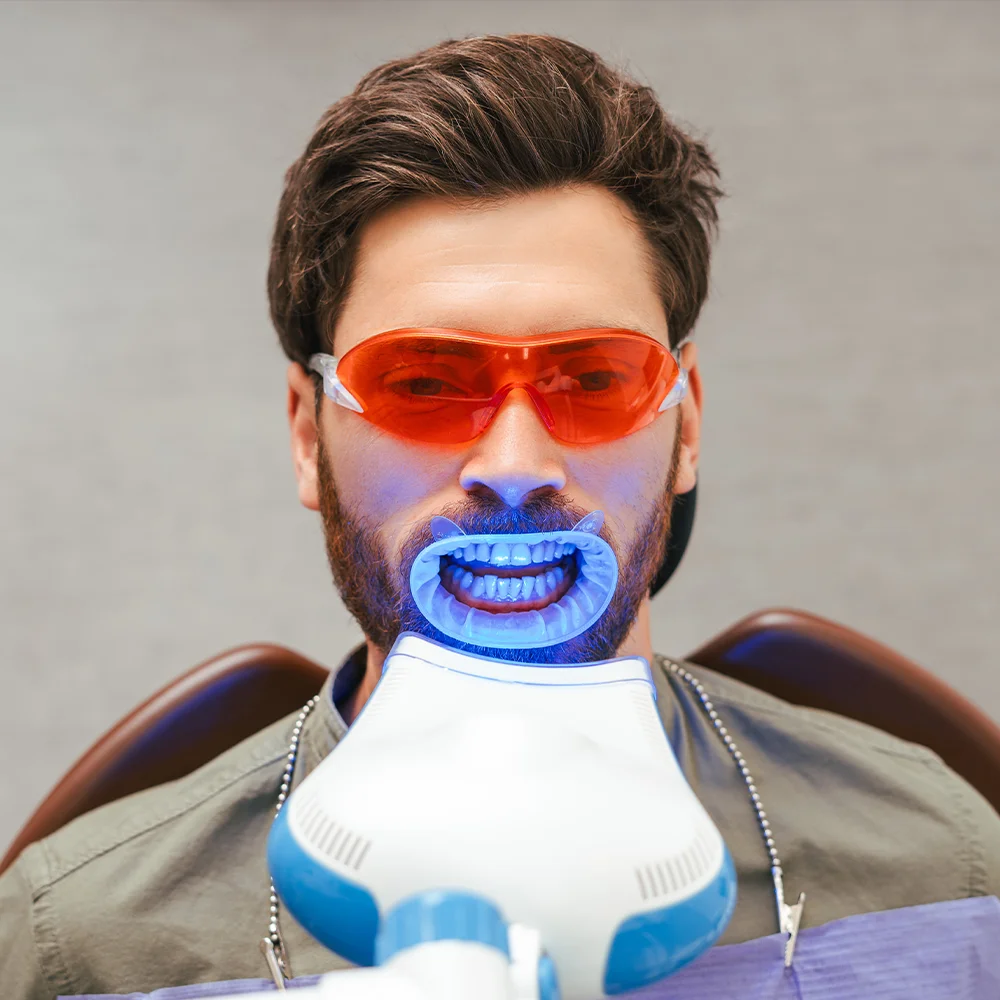
When you look in the mirror, do you like your smile? Or do you sometimes hold back because your teeth look yellow or stained? You’re not alone. Coffee, tea, smoking and age all dull the colour of teeth over time, and that can knock your confidence. Professional whitening at Ayla Dent can help lighten that discolouration.
Discolouration can come from the outside or from within the tooth. External stains usually come from everyday habits: your morning coffee, strong afternoon tea or red wine gradually build up on the enamel and leave lasting marks. Smoking is one of the biggest culprits, harming both enamel and gums.
Internal discolouration happens when the dentine beneath the enamel darkens. Ageing, certain antibiotics (particularly tetracyclines), fluorosis and past injuries are the main causes. Surface cleaning usually isn’t enough for this kind of staining, so professional treatment is needed.
At Ayla Dent, whitening isn’t a one-size-fits-all procedure. It follows a plan made for you.
1. Assessment and examination
Before we start, we check your teeth and gums thoroughly. Any gum disease, decay or issues with existing crowns are dealt with first. Whitening works better, and the result holds up longer, on a healthy base.
2. A plan made for you
Based on your current shade, what’s causing the staining and what you’d like to achieve, we choose the method that suits you. Whether that’s in-clinic whitening, custom trays at home, or both becomes clear after the examination.
3. In-clinic whitening
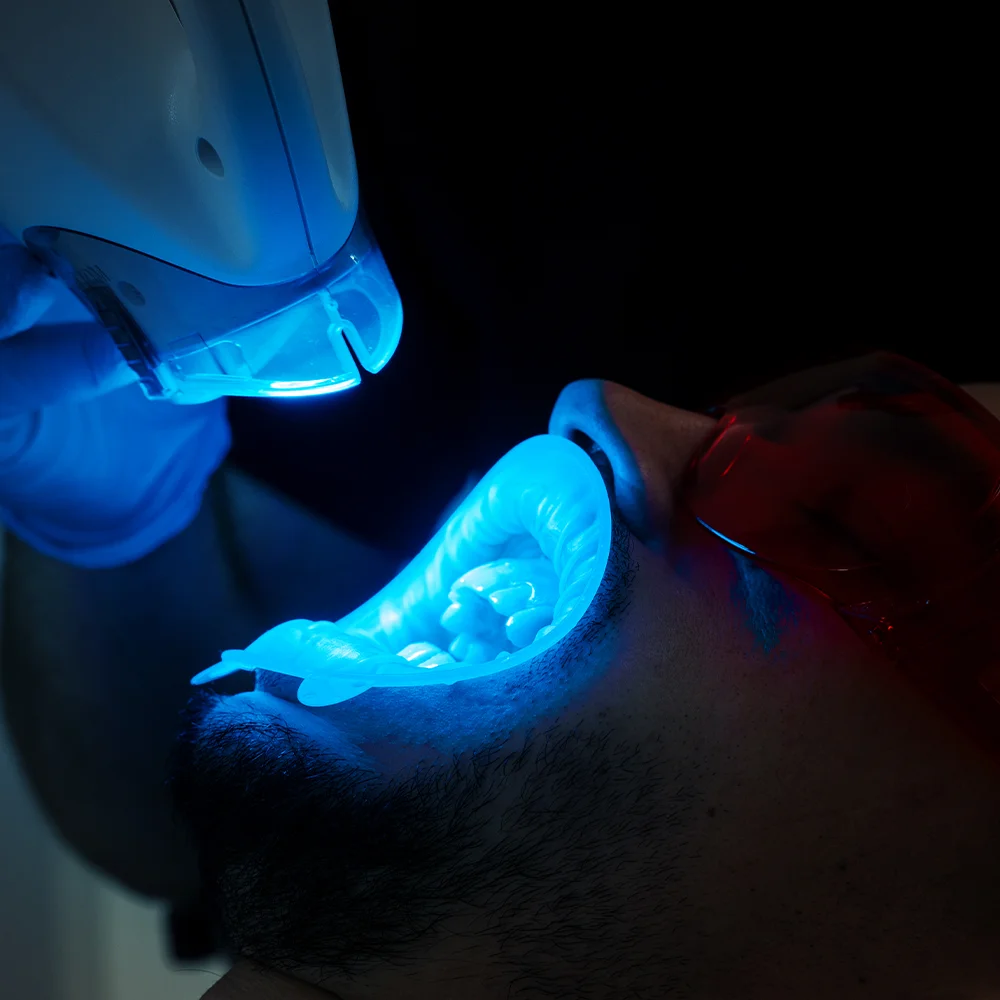
In-clinic whitening uses a professional-strength gel and an activating light, with a protective barrier over the gums. Many patients see a noticeably brighter shade after a single session, though results vary.
4. At-home follow-up
To extend and reinforce the in-clinic result, you can be given custom trays and a lower-strength gel to use at home. Combining the two supports both the immediate and longer-term effect.
Some temporary sensitivity is common after whitening and usually settles within a few days. Avoiding strongly coloured food and drink (coffee, tea, red wine, tomato sauce) for the first 48 hours helps the result last longer.
How you look after your teeth has a direct effect on how long the result lasts. Regular brushing, flossing and check-ups all help keep your smile brighter for longer. Our team is still here for you after treatment.
When done under dental supervision after a proper assessment, whitening is a widely used treatment. As with any treatment, an individual assessment matters. During pregnancy or breastfeeding, or if you have severe sensitivity or active gum disease, the timing may need to be rethought.
Porcelain crowns, zirconia and composite fillings don’t respond to whitening. If you have cosmetic restorations, your plan may be looked at as part of a wider smile design. Our dentists take all of this into account when planning your treatment.
Yellowed teeth don’t have to be something you just live with. It starts with a single appointment. Our aim isn’t only to lighten your teeth, but to help you feel good about your smile when you look in the mirror.
Get in touch with Ayla Dent to find out more about professional whitening and set up your personal treatment plan.
Whitening done under a dentist's supervision with the right method, after the teeth have been assessed, is considered safe. Temporary sensitivity lasting a few days can occur. Any decay or gum problems need to be treated first.
Gels, pens and strips from shops or online have a low concentration of active ingredient and aren't made for your teeth. Used incorrectly, they can irritate the gums or leave a patchy look. In the clinic we first find out what's causing the discolouration; some stains are better treated with cosmetic restorations than with whitening.
It depends on your diet and whether you smoke. Tea, coffee, cola and smoking bring staining back faster. Good daily care and a professional clean every six months help the result last longer.
If you have untreated decay, gum disease or severe sensitivity, those are treated first. Whitening is postponed during pregnancy and breastfeeding. Fillings, veneers and crowns don't change colour, so planning is different if you have restorations on your front teeth.
Cleaning removes deposits and surface stains, so teeth look cleaner and a little lighter. But it doesn't change the natural colour of the tooth. Lightening the shade is planned separately as whitening.
To find out which method suits you, book an examination.