

The habits children pick up early are the foundation of a healthy smile for life. From the first tooth to the teenage years, it matters to follow how the teeth develop, prevent decay and build good care habits.
Paediatric dentistry is the branch of dentistry that protects children’s teeth from infancy to adolescence, follows their development and provides the treatment they need.
At our clinic in Bağcılar, we tailor our approach to each child’s age, stage of development and needs. Fear of the dentist that starts in childhood is one of the most common reasons adults neglect their teeth, so making the first experience a good one matters as much as the treatment itself.

Baby teeth may be temporary, but they do important work. They help children chew properly, develop speech and make room for the adult teeth in the right place.
Untreated decay in baby teeth can lead to pain, infection and early tooth loss. Losing baby teeth too early can disrupt how the adult teeth come through and lead to orthodontic problems later.
Regular check-ups mean:

The first visit is recommended after the first baby tooth appears, or by your child's first birthday at the latest.
It's not just a check of the teeth. It's also a chance to give parents advice on feeding, cleaning, teething and preventing decay.
Meeting the dentist before there's any pain or problem gives your child a healthy start.

Children's dental needs change with age and development, so care and follow-up should be planned to fit each stage.
Before the first teeth appear, wipe the gums with a clean, damp cloth. Once the first tooth comes through, start brushing with a soft brush; we'll show parents how.
The focus is on good brushing habits and protecting baby teeth from decay. Fluoride toothpaste is used in an age-appropriate amount, with a parent supervising.
Baby teeth give way to adult teeth. We follow the order they come through, jaw growth and oral hygiene; fissure sealants and fluoride may be considered for new molars.
Check-ups continue as the adult teeth develop. We also look at orthodontic needs, clenching habits and mouthguards for sport.
Preventive dentistry
Fluoride, fissure sealants and regular plaque checks to lower the risk of decay.
Fillings for baby teeth
After the decay is removed, the tooth is repaired with a suitable filling material. This can be done under local anaesthetic.
Pulp treatment
When the inside of a baby tooth is affected, child-specific pulp treatments aim to keep the tooth until it falls out naturally.
Stainless steel crowns
A durable restoration for baby teeth too badly decayed for a filling.
Orthodontic assessment
We follow alignment and jaw growth to spot possible problems early.
Sports mouthguards
For children who play contact sports, a custom mouthguard can help protect the teeth from knocks.
Don’t neglect baby teeth
Baby teeth aren’t just for chewing; they guide the adult teeth in. Losing them early can mean lost space in the jaw and orthodontic problems. Every cavity deserves attention.
Treatment depends on the condition of the tooth and the child's age and stage of development.

Fluoride is a mineral that helps strengthen enamel and lower the risk of decay. Depending on your child's age and risk, the dentist may recommend a professional fluoride application.
A protective coating that seals the deep grooves on the chewing surfaces of back teeth, so food and bacteria are less likely to collect. It may be considered for newly erupted adult molars.
When a baby tooth is lost early, a space maintainer can stop the neighbouring teeth drifting into the gap, keeping room for the adult tooth to come through.
Used for baby teeth that can't be saved. The decision considers the tooth and how the adult tooth underneath is developing.
Falls, knocks and sports accidents can break, move or knock out teeth. See a dentist without delay; early assessment can make the difference in saving the tooth.
Long-term thumb sucking, tongue thrusting and similar habits can affect how the teeth and jaws develop. It helps to assess them early and give the right guidance.
Following alignment and jaw growth in childhood helps spot problems early. If needed, suitable orthodontic treatment options are considered.
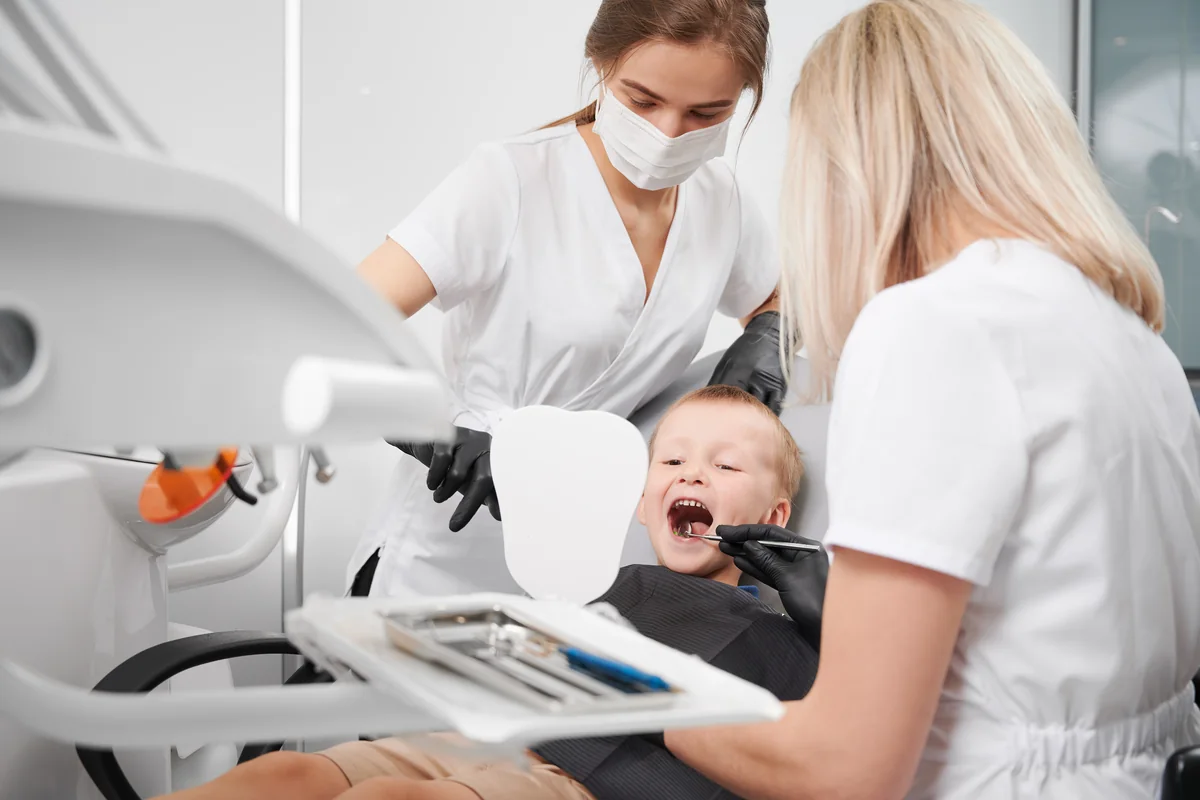
When deep decay or an injury reaches the inside of the tooth, child-specific pulp treatments may be used. The aim, where possible, is to keep the baby tooth until it falls out naturally. It's not the same procedure as root canal treatment on adult teeth.
As soon as the first tooth appears, clean it twice a day, morning and night, with a soft baby toothbrush.
Use a rice-grain smear of fluoride toothpaste up to age 3, and a pea-sized amount from 3 to 6.
Not giving juice or sugary drinks in a bottle makes a big difference to the risk of decay.
Check-ups are scheduled at intervals set by the dentist based on your child's risk and development, so problems are caught early.
Alongside brushing and toothpaste, diet has a direct effect on decay. Limit sugary food and drinks and avoid constant snacking. Sugary drinks at bedtime, when they stay in contact with the teeth for hours, are a particular risk for early childhood decay.
Until children have the hand skills to do it well, a parent should check their brushing and finish it off when needed. Good oral care keeps teeth clean now and builds habits they'll carry into later life.
Fear of the dentist can make children avoid treatment and let problems get worse. That's why a good first experience matters as much as the treatment.
To help children feel safe, treatment should be planned around their age and emotional development. When the dentist explains things in simple words, shows them the instruments and lets them take part, anxiety tends to ease.
Parents play a part too, by staying calm and supportive. Avoid words that might frighten your child, and never use a dental visit as a punishment or threat.
Every child's needs and development are different, so we plan each examination and treatment individually. Our approach is built on:
We want to support not just your child's teeth today, but the habits they'll keep for years to come.