
Toothache rarely waits. Severe pain, sensitivity to hot and cold, or pain when you chew can be signs that the pulp inside the tooth has been damaged.
At Ayla Dent in Bağcılar, root canal treatment means removing infected or irreversibly damaged pulp from inside the tooth, cleaning the root canals and sealing them with suitable materials.
The main aim, where possible, is to keep your natural tooth and let it go on working.

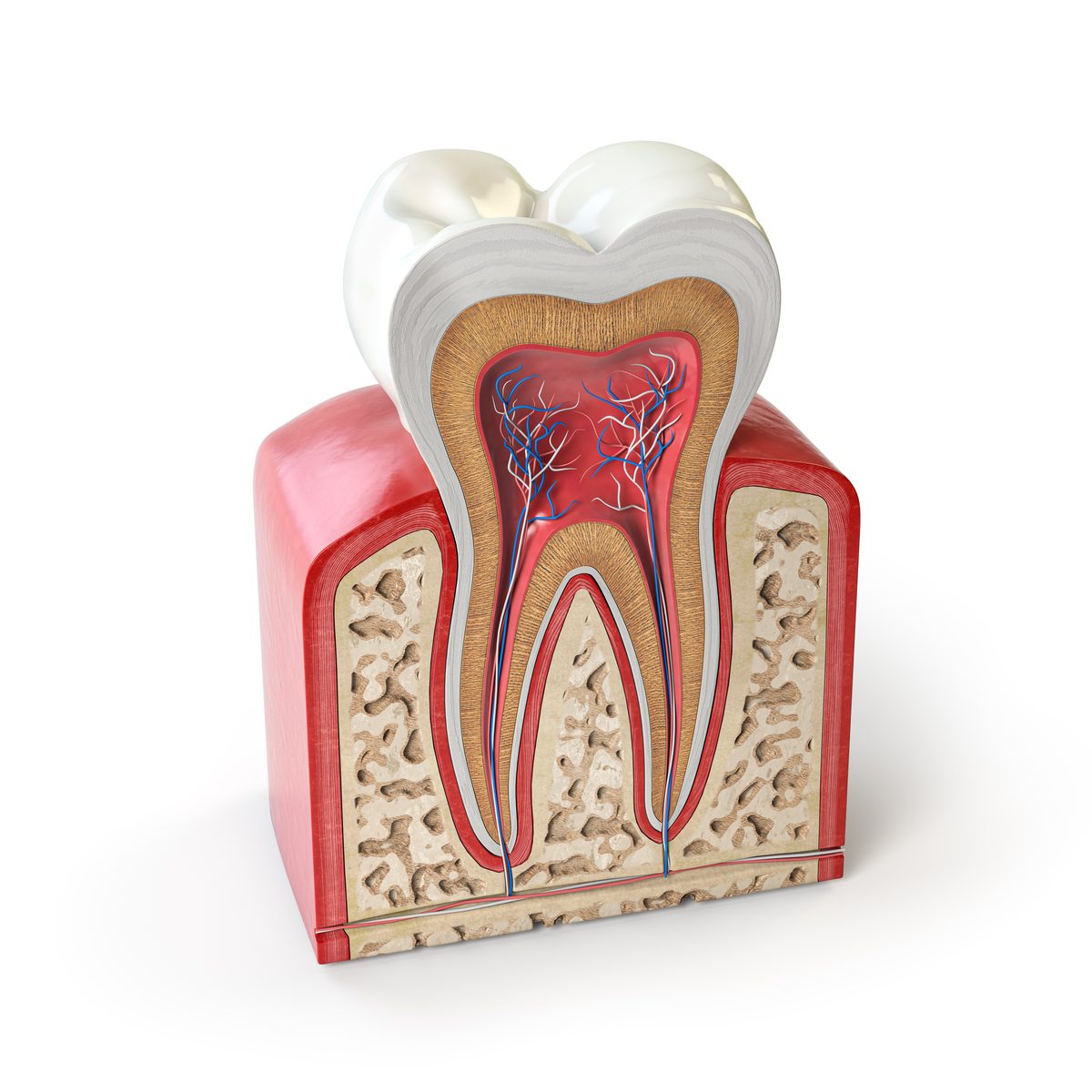
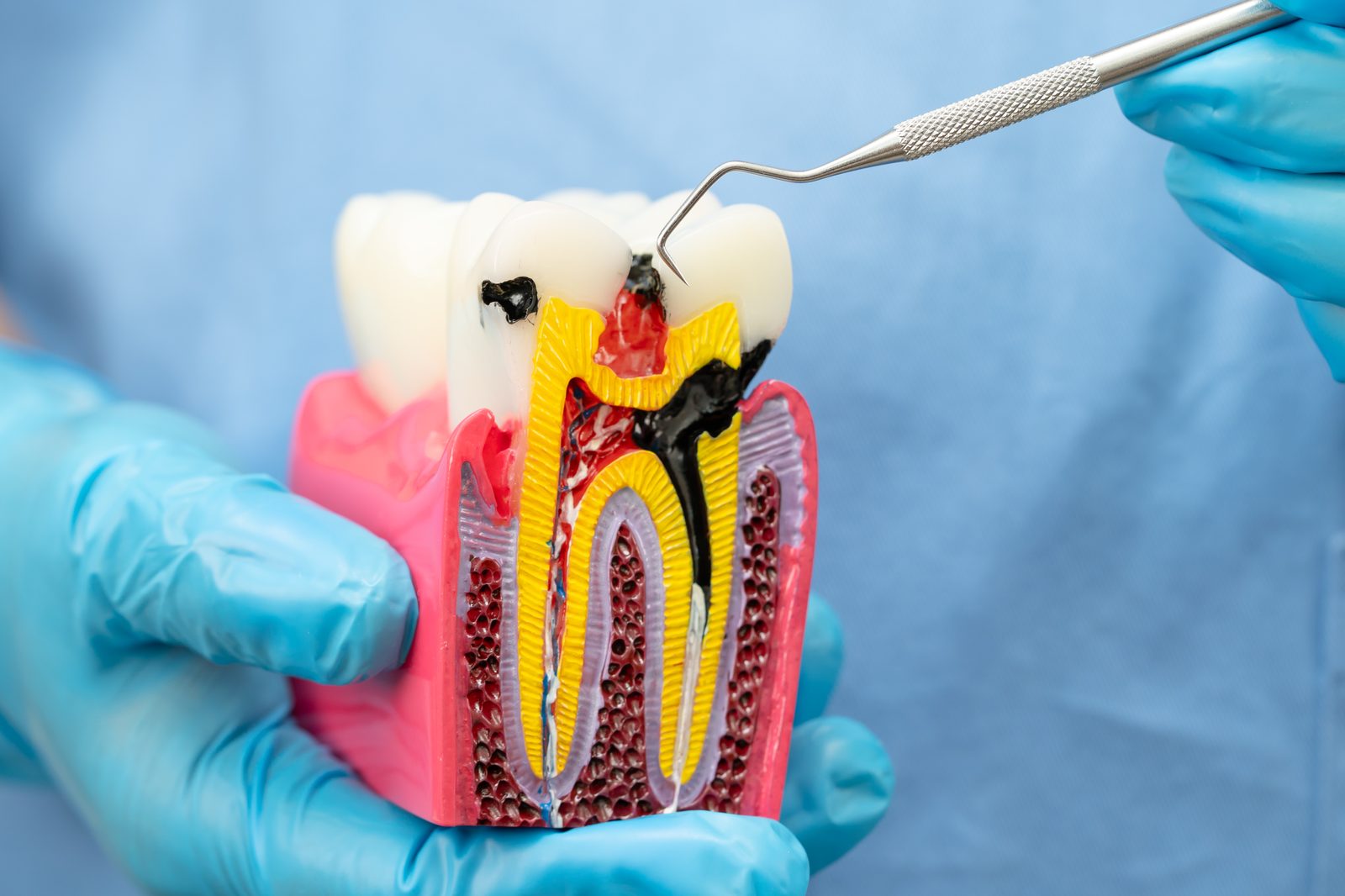
Beneath the hard outer layers of a tooth is living tissue called the pulp, which contains nerves and blood vessels. Deep decay, cracks, fractures or a knock can infect or seriously damage it.
At that point a filling alone may not be enough. In root canal treatment the damaged tissue is removed, the canals are cleaned with special instruments and disinfecting solutions, and then they’re filled and sealed.
In suitable cases, this means the tooth can be kept rather than extracted.
Pain alone doesn’t tell us whether you need a root canal. Your dentist looks at the examination together with X-rays where needed.
One or more of the following may point to a problem that needs root canal treatment:
Less pain isn’t always good news
When the pulp dies, the pain can ease or stop altogether, while the infection quietly spreads around the root. So don’t put off an examination if toothache keeps coming back or won’t go away.
It’s carried out in several stages, planned around the condition of the tooth.
1. Examination and X-ray
We assess the roots, canals and surrounding tissue
2. Anaesthetic and isolation
The area is numbed and a rubber dam keeps the tooth free of saliva
3. Cleaning the canals
Damaged tissue is removed and the canals are cleaned and shaped
4. Filling the canals
The canals are sealed with a filling material
5. Restoring the tooth
The tooth is finished with a filling, onlay or crown

First we check the overall condition of the tooth. Where needed, an X-ray shows the roots, the canal system and the tissue around them. This tells us whether a root canal is needed and how much work is involved.
The area is numbed with local anaesthetic. Then a special rubber sheet isolates the tooth to keep saliva and bacteria away as much as possible.
The canals are reached through the top of the tooth and the damaged or infected pulp is removed. The canals are then cleaned and shaped with special instruments and treated with disinfecting solutions.
The cleaned, shaped canals are filled and sealed. The aim is a tight seal that lowers the risk of infection returning inside the canals.
After the root canal, the top of the tooth is rebuilt. Depending on how much tooth is left and where it is, options include a composite filling, an onlay or a crown. For back teeth that have lost a lot of structure, a crown may be recommended to protect them from chewing forces.
It depends on the tooth, how many canals it has, the extent of infection and how it responds to treatment.
Some cases are finished in one visit; where infection is more advanced or extra treatment is needed, several visits may be planned.
So there’s no single number that applies to everyone. We’ll tell you after your examination.
The area is numbed with local anaesthetic first, so the procedure is as comfortable as possible.
That said, anaesthetic can be harder to get working in a badly inflamed tooth. In that case your dentist may use other anaesthetic techniques or additional steps.
For a few days afterwards the tooth may be tender, especially when you chew. If pain or swelling is severe, getting worse or lasting, contact your dentist.
Putting off a needed root canal lets the infection progress. It can spread to the tissue at the tip of the root and cause an abscess, swelling, pain and bone loss.
Pain going away by itself isn’t necessarily reassuring. Even if it eases, get checked if you suspect something is still wrong.
Choosing between the two means looking at the roots, the surrounding tissue and whether the tooth can be kept working.
If the tooth can be treated, keeping it is usually the preferred option. A fractured root, extensive loss of tooth structure, or a tooth that can’t be reliably saved may lead to extraction.
If the tooth is extracted, it can be replaced with an implant, a bridge or another option. The right choice is made after examination and imaging.
They treat different problems; which one you need depends on how deep the decay or damage goes.
If decay is limited to the hard outer layers and the pulp is unaffected, a filling may be enough.
If decay or a knock has irreversibly damaged the pulp, a filling won’t be enough and a root canal may be needed.
That’s why getting checked before the pain gets worse helps protect the tooth from further damage.
It depends on a number of factors.
How much healthy tooth is left, the restoration on top, your oral care, biting forces and regular check-ups all play a part. For back teeth that have lost a lot of structure, a crown may be considered to protect against fracture.
If you’re looking for a dentist in Bağcılar for root canal treatment, the first step is finding out what’s causing your pain or sensitivity.
At Ayla Dent we assess the tooth before treatment and, where needed, check the root and surrounding tissue on X-ray. In suitable cases the aim is to keep your natural tooth working for as long as possible.
If you have toothache or sensitivity to hot and cold, book an examination to find out whether you need a root canal.