
A dull ache right at the back of your mouth, swollen gums, or discomfort when you chew can all raise the same question: “Is my wisdom tooth coming through?”
Wisdom teeth are the last teeth to come through. In some people they arrive without any trouble; in others there isn’t enough room in the jaw, which can lead to pain, swelling and infection. A tooth that stays impacted or comes in at the wrong angle can also affect the teeth and tissue around it.
But here’s the key point: not every wisdom tooth causes problems, and not every wisdom tooth needs to come out. The right plan depends on the tooth’s position, its condition and its effect on the surrounding tissue.
So why do wisdom teeth hurt, which symptoms are normal, and when might extraction be needed? Let’s go through it.

What Are Wisdom Teeth and Why Do They Cause Problems?
Wisdom teeth, or third molars, are the last teeth to develop. They usually start coming through in early adulthood, but because everyone’s jaw and teeth are different, the timing varies.
Some people have enough room, and the wisdom tooth comes in like any other molar, needing no treatment. When there isn’t enough room, the tooth can stay fully or partly impacted.
With partly erupted wisdom teeth in particular, pockets can form between the tooth and gum where bacteria and food collect. Over time this can lead to pain, swelling and gum infections.
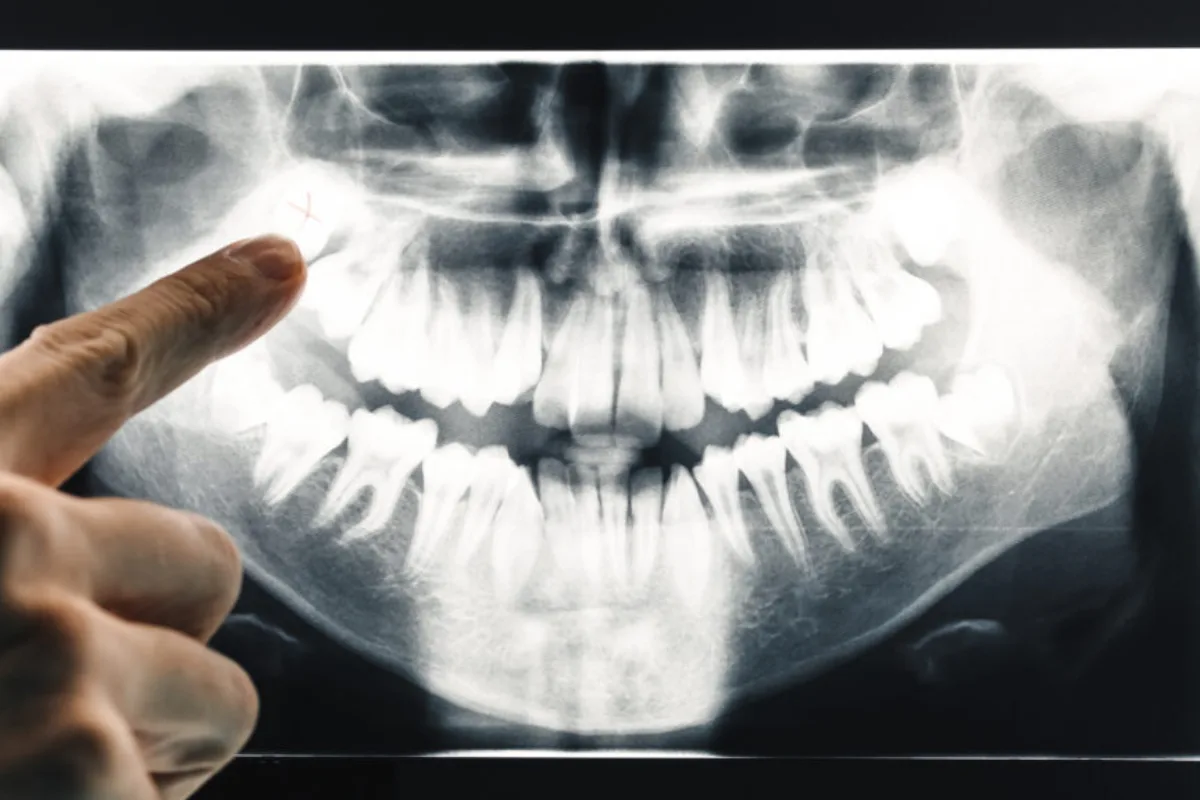
To assess the tooth’s position, we usually use a clinical examination and, where needed, a panoramic X-ray. That shows clearly how the tooth relates to the jawbone, the neighbouring teeth and nearby structures.
What Is an Impacted Wisdom Tooth?
Sometimes a wisdom tooth stays completely under the gum or inside the jawbone. This is called an impacted tooth. Some can be monitored for years without causing symptoms; others press on the surrounding tissue and cause problems.
Wisdom teeth that lean towards the second molar can make that tooth harder to clean and sometimes damage it. That’s why impacted teeth should be checked regularly.
Symptoms of a Wisdom Tooth Coming Through
It’s different for everyone. Some people barely notice; others have clear discomfort.
Common symptoms include:
- Pain or pressure at the back of the jaw
- Swollen, tender gums
- Discomfort when chewing
- A bad taste or bad breath
- Difficulty opening your mouth
- Pain spreading to the jaw or around the ear
These don’t always mean something serious, but if pain goes on for a long time or swelling keeps getting worse, see a dentist.
Sometimes the gum over the tooth becomes inflamed. This is especially common with partly erupted teeth and can cause pain, swelling and difficulty opening the mouth.
For surgical procedures such as wisdom tooth removal in Bağcılar, we first assess the tooth’s position and then plan treatment to suit you.
Does a Painful Wisdom Tooth Always Need Removing?
No. Pain doesn’t always mean the tooth has to come out.
Sometimes the pain comes from the tooth erupting, irritated gum around it, or trapped food. But extraction may be recommended for repeated infections, a risk of damage to the neighbouring tooth, decay or a deeply impacted position.
So instead of deciding based on how much it hurts, the tooth needs to be assessed with an examination and imaging.
How Is a Wisdom Tooth Removed?

Many people picture wisdom tooth removal as painful and difficult. In reality, local anaesthetic is used so that you don’t feel pain during the procedure.
How it’s done depends on the tooth’s position. A fully erupted, easy-to-reach tooth can be taken out with a standard extraction. Impacted or partly erupted teeth may need a surgical procedure.
In surgical extractions, a small opening may be made in the gum to reach the tooth, and if needed the tooth is removed in sections. How long it takes depends on the position and difficulty.
Following your dentist’s advice afterwards is very important for healing well.
Recovery After Wisdom Tooth Removal
For the first few days you may have mild pain, tenderness or swelling, especially after a surgical extraction. That’s part of normal healing.
One of the most important things is protecting the blood clot that forms in the socket. It plays a key role in healing.
In the first few days:
- Go easy on the area
- Avoid very hot food and drinks
- Avoid hard foods that could irritate the area
- Follow your dentist’s oral care instructions
- Protect the area in the first few hours
Using a straw or rinsing too vigorously can sometimes dislodge the clot, so follow the instructions your dentist gives you.
When Should You See a Dentist?

Some pain and tenderness for a while after extraction can be normal, but certain signs mean you should be checked again.
For example:
- Severe pain that keeps getting worse
- Bleeding that won’t stop
- A high temperature
- Marked facial swelling
- Serious difficulty opening your mouth
- Increasing discomfort with a bad smell or taste
If you notice any of these, contact your dentist without delay.
Oral Care After Removal

Don’t stop cleaning your mouth altogether, but be gentle around the extraction site for the first few days.
You can keep brushing your other teeth as normal; just take extra care around the extraction site for as long as your dentist recommends.
As you heal, you can go back to your normal routine. Cleaning the back teeth well is especially important for preventing future decay and gum problems.
Wisdom teeth may seem like a small part of your oral health, but because of where they are, they may need regular monitoring.
The Bottom Line: Wisdom Teeth Are Different for Everyone

The key point is that everyone’s jaw and teeth are different. A wisdom tooth that comes in without trouble in one person may stay impacted or press on surrounding tissue in another.
So if you have pain, swelling or recurring discomfort, rather than just masking it with painkillers, it’s important to find out why it’s happening.
An early examination and the right imaging mean the tooth can be assessed and, if needed, treatment planned. A healthy mouth depends not only on the teeth you can see at the front, but on the ones right at the back too.
Frequently Asked Questions
1. Do all wisdom teeth need to come out?
No. If the tooth has come through healthily, isn’t harming the neighbouring teeth and can be cleaned properly, it may not need removing. The decision depends on its position and its effect on your oral health.
2. Does wisdom tooth removal hurt?
Local anaesthetic is used, so you shouldn’t feel pain during the procedure. Afterwards there may be mild to moderate pain and tenderness; follow your dentist’s advice.
3. How long does it take?
It depends on the tooth. A normally erupted tooth is quicker; an impacted or awkwardly positioned one takes longer.
4. When can I eat afterwards?
It depends on the procedure and your dentist’s advice. Soft, not-too-hot food is usually best at first.
5. Can wisdom tooth pain spread to the ear?
Pain at the back of the jaw can feel as if it’s spreading to the ear, temple or jaw. But not every earache is caused by a wisdom tooth; an examination is needed to find the cause.
6. Can an impacted wisdom tooth stay without causing problems?
Yes. Some can be monitored without causing symptoms or damage. Regular check-ups are still important to see how they affect the surrounding tissue.
7. Is swelling normal afterwards?
Some swelling is common, especially after surgery. If it gets worse or comes with other symptoms, see your dentist.
8. Can a wisdom tooth hurt again after it’s come through?
Yes. Even once fully through, it can hurt later because of decay, gum problems or difficulty keeping the area clean.
9. Can I smoke after wisdom tooth removal?
Smoking can slow healing and increase the risk of dry socket. Don’t smoke for as long as your dentist advises.
10. What is dry socket?
It happens when the blood clot in the socket is lost too early. It’s usually noticed a few days after extraction as increasing pain and a bad taste. If you have these symptoms, see your dentist.
11. Do wisdom teeth make the front teeth crooked?
Whether wisdom teeth cause crowding at the front is debated, so they aren’t removed just to prevent it. If you’re worried about alignment, an orthodontic assessment can help.