
Does your jaw click when you open your mouth, drift to one side, or ache when you chew? These signs are sometimes linked to the temporomandibular joint (TMJ) and the muscles around it.
The jaw joint connects the lower jaw to the skull and lets you talk, chew and open your mouth. Joint position, the joint disc, the chewing muscles and jaw movement all work together, which is why problems in this area rarely have a single, simple cause.

What Is the Temporomandibular Joint (TMJ)?
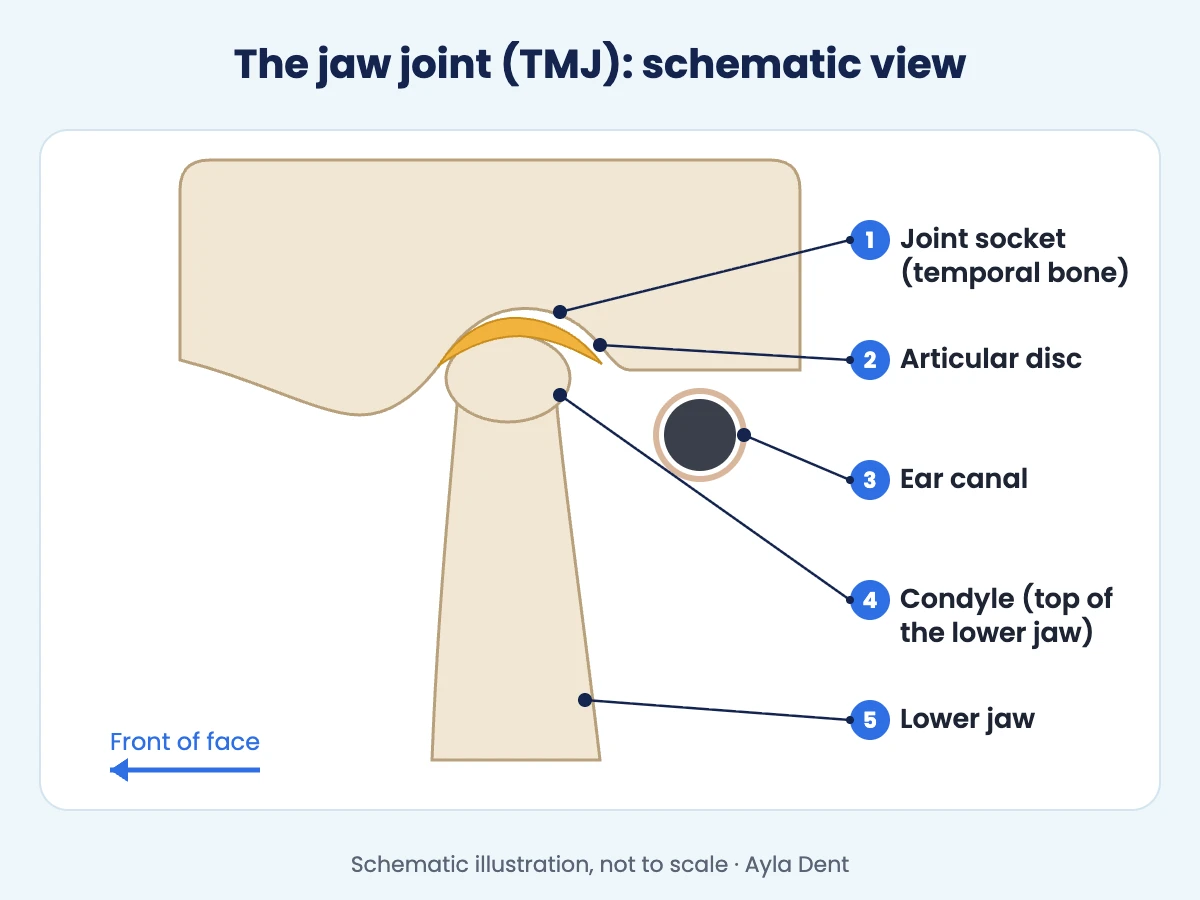
The TMJ sits just in front of each ear, where the lower jaw meets the temporal bone of the skull. The joints on the left and right move together.
Its main parts are:
- The rounded top of the lower jaw (the condyle)
- The joint surface on the temporal bone
- The articular disc
- The joint capsule and ligaments
- The chewing muscles that move the jaw
The disc sits between the bony surfaces and helps the joint glide smoothly as the jaw opens and closes.
Is There a “Correct” Jaw Joint Position?
Jaw joint position describes how the condyle relates to the joint surface and disc.
There is no single, fixed ideal jaw position that applies to everyone. The joint naturally changes position as you open, close and chew.
In a clinical assessment, the position on its own matters less than how the jaw moves, whether there is pain, how the muscles behave and how well the jaw functions. A click, or a difference seen on a scan, does not automatically mean treatment is needed.
TMJ Disorder Symptoms
Temporomandibular disorders (TMDs) can show up in different ways.
Jaw Pain
Pain may be felt in front of the ear, around the temples or in the chewing muscles. It can get worse with chewing or long conversations.
Jaw Clicking or Popping
You may hear a click, pop or grating sound when opening or closing. NIDCR notes that clicking or popping without pain is common, considered normal and does not require treatment.
Jaw Shifting to One Side
The jaw may drift to the left or right as it opens. This can relate to muscle activity or to mechanical changes inside the joint.
Limited Mouth Opening
Some TMJ problems reduce how wide the mouth can open. A jaw that locks, or opening that becomes painful and restricted, needs a closer look.
Why Does the Jaw Joint Change?
TMJ problems cannot be traced to one cause. Disc-related changes, injuries, joint diseases, muscle pain and long-term strain on the jaw are among the factors a clinician considers.
Clenching or grinding can come with muscle pain in some people, but not every TMJ disorder is caused by bruxism.
Related reading: What Is Bruxism? Teeth Grinding Causes and Treatment
How Is a TMJ Disorder Diagnosed?
Diagnosis starts with your history and a clinical examination. A dentist or specialist may look at:
- Where the pain is and how long it has lasted
- Jaw movement and how wide you can open
- Joint sounds
- Tenderness in the chewing muscles
- Any past injury
- Your bite and findings inside the mouth
Imaging such as MRI or CT can be used when needed, but not every patient requires advanced imaging.

How Are TMJ Disorders Treated?
Treatment depends on the type of problem and your symptoms. NIDCR recommends starting with simple, conservative and reversible treatments and avoiding those that permanently change the jaw or bite.
Easing jaw habits: Reducing clenching, constant gum chewing and other habits that strain the jaw.
Softer foods for a while: Choosing foods that are easier to chew during painful periods.
Physiotherapy and exercises: Gentle, guided jaw exercises can help suitable patients.
Oral appliances: A dentist may suggest a splint in some cases. Evidence on whether splints reduce TMD pain is limited, and results vary from person to person.
Further treatment: Some specific joint conditions may need more advanced care. Treatments that permanently change the bite, or surgery, should not be the first option.
Is Jaw Clicking Dangerous?
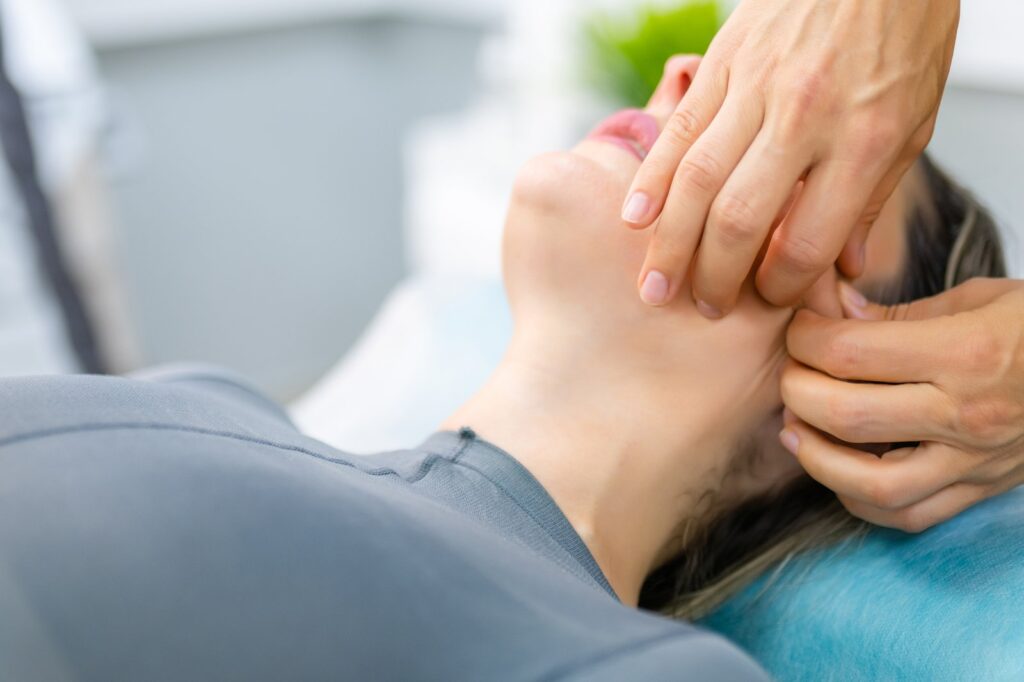
Clicking without pain, locking or limited movement is common and usually needs no treatment.
If the click comes with pain, opening that is getting smaller, or a jaw that locks, it should be assessed.
Frequently Asked Questions
Can a shifting jaw correct itself?
Some temporary changes in jaw movement settle down. Constant shifting, pain or locking should be examined to find the cause.
Can a TMJ disorder cause ear pain?
Some TMJ problems are felt around the ear. Ear conditions should also be ruled out.
Can braces fix a TMJ disorder?
Orthodontic treatment is not a routine treatment for TMJ disorders. The need for orthodontics and the jaw joint symptoms should be assessed separately.
Related reading: Braces and TMJ: Does Orthodontic Treatment Cause Jaw Pain?
Conclusion
Looking after the jaw joint means paying attention to pain, movement, muscle function and quality of life, not only to where the joint sits.
This article is for general health information and does not replace an individual assessment or diagnosis.
Sources
- NIDCR – Temporomandibular Disorders (TMDs): https://www.nidcr.nih.gov/health-info/tmd
- NIDCR – Bruxism: https://www.nidcr.nih.gov/health-info/bruxism
- NIDCR – Less Is Often Best in Treating TMD: https://www.nidcr.nih.gov/health-info/publications/less-often-best-treating-tmd