
Dental implants are a common way to replace missing teeth. Over time, however, the gums and bone around an implant can become inflamed.
What people often call an implant infection can mean different conditions, affecting either the soft tissue around the implant or the bone that supports it.
Bleeding, redness, swelling or discharge around an implant are signs that should be checked.
For an overview of implant treatment, see our dental implants page.

What Is an Implant Infection?
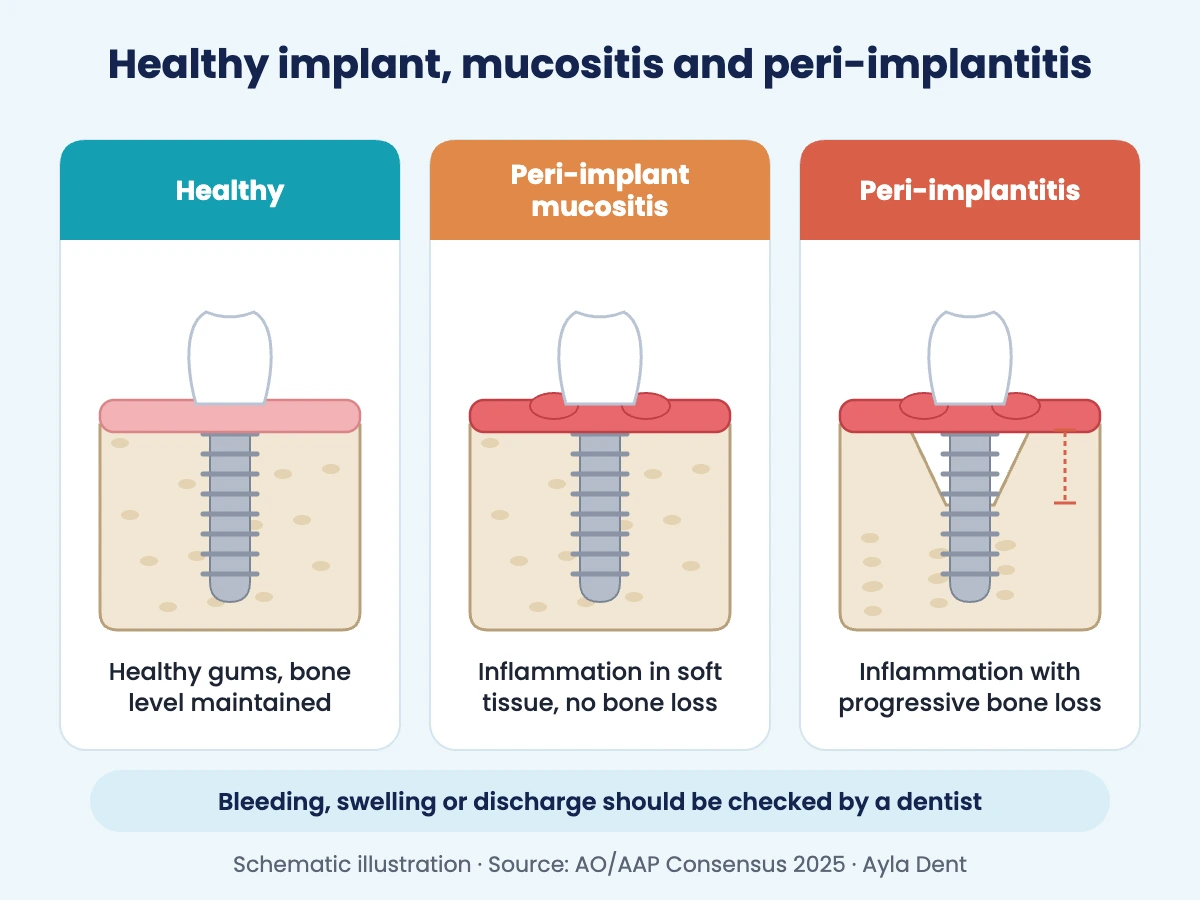
Inflammatory conditions around implants fall into two main groups.
Peri-Implant Mucositis
Inflammation limited to the soft tissue around the implant.
It can cause bleeding, redness and swelling.
There is no progressive loss of the supporting bone.
At this early stage, professional cleaning and controlling risk factors are important.
Peri-Implantitis
Peri-implantitis is inflammation around an implant combined with progressive loss of the supporting bone.
Without treatment, the bone around the implant can continue to decrease.
In some patients, this can affect the long-term stability of the implant.
Signs of an Implant Infection
Possible signs include:
- Redness of the gum around the implant
- Bleeding gums
- Swelling and tenderness
- A bad taste or smell in the mouth
- Discharge (pus) around the implant
- In advanced cases, a feeling that the implant or crown is loose
Some cases of peri-implantitis cause little or no pain.
So the absence of pain does not mean the tissues around an implant are healthy.
What Causes It?
Bacterial plaque plays a central role in inflammation around implants.
Several risk factors can make it more likely to start or progress.
Poor Oral Hygiene
Plaque build-up around the implant can trigger inflammation in the soft tissue. Skipping daily cleaning can harm the health of the tissues around the implant.
History of Gum Disease
People who have had periodontal disease may be at higher risk of problems around implants.
Smoking
Smoking can harm oral tissues and slow healing.
Poorly Controlled Diabetes
When blood sugar is poorly controlled, the risk of inflammatory complications around implants may be higher.
Implant and Crown Factors
The position of the implant, how easy the crown is to clean and some design features can also affect the health of the surrounding tissues.
How Is It Diagnosed?
A clinical examination is essential.
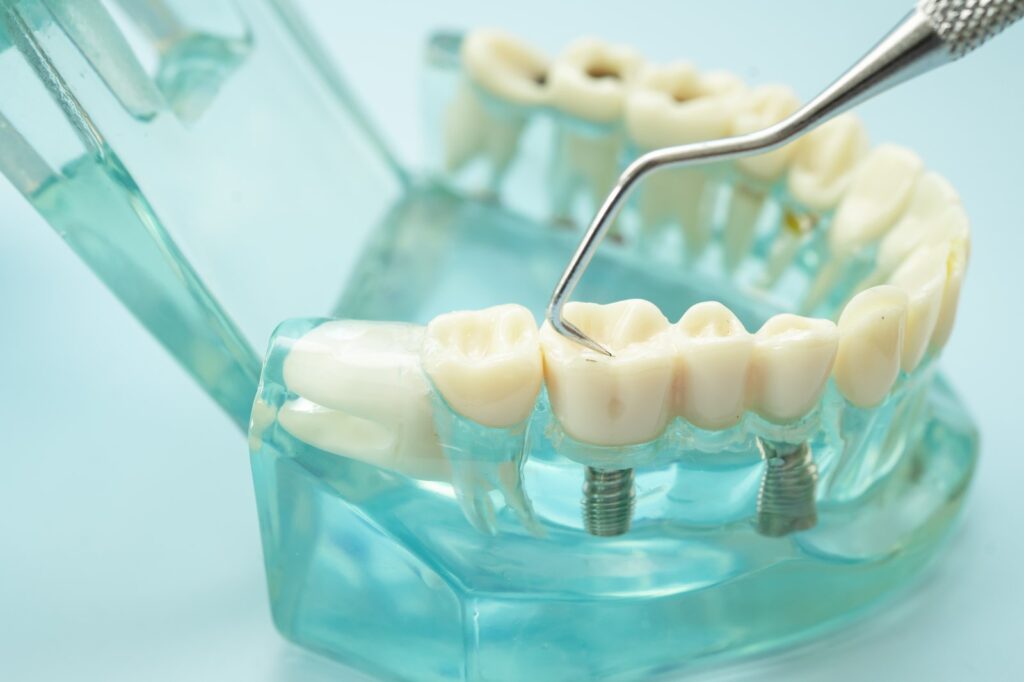
The dentist checks the tissues around the implant, bleeding, the depth of the pockets around it and the design of the crown.
When needed, an X-ray is used to check the bone level around the implant.
Pain or swelling alone are not enough for a diagnosis.
How Is It Treated?
Treatment depends on the type and severity of the condition.
For peri-implant mucositis, the focus is professional plaque removal, better daily cleaning and managing risk factors.
For peri-implantitis, professional cleaning and, depending on the extent, other treatments may be needed.
Some advanced cases may require surgery.
Antibiotics are not routinely needed for every implant infection. The decision depends on the infection and your general health.
Does It Go Away on Its Own?
If there is bleeding, swelling or discharge around an implant, waiting for it to settle on its own may not be wise.
Peri-implantitis, which involves bone loss, needs a professional assessment and treatment suited to the stage of the disease.
Early assessment helps protect the tissues around the implant.

How to Prevent It
Regular care plays a key role in the long-term health of implants.
- Clean your teeth and the area around the implant as advised.
- Use suitable interdental cleaning tools.
- Do not ignore signs such as bleeding gums.
- Keep up regular check-ups and professional teeth cleaning.
- Discuss smoking and other risk factors with your dentist.
- Keep conditions such as gum disease or diabetes under control.
Frequently Asked Questions
Is an implant infection painful?
It can be, but not every case causes noticeable pain.
Can an implant infection make the implant fail?
Advanced peri-implantitis can reduce the bone around the implant and increase the risk of losing it. Not every infection leads to implant loss.
Is bleeding around an implant normal?
Slight bleeding right after surgery is different from bleeding around an implant that keeps coming back. Repeated bleeding should be checked.
Are antibiotics used for implant infections?
Not in every case. Treatment is planned according to the type of disease and the clinical findings.
How do you clean around an implant?
With a toothbrush and suitable interdental tools. The right tools and technique depend on the design of the crown or bridge on the implant.
Conclusion
Inflammation around implants may start in the soft tissue and, in some cases, affect the supporting bone.
Good daily cleaning, controlling risk factors and regular professional care help keep implants healthy.
If you notice bleeding, swelling, discharge or looseness, see your dentist.
This article is for general information only and is not personal diagnosis or treatment advice.
Sources
- American Academy of Periodontology – AO/AAP Consensus on Prevention and Management of Peri-Implant Diseases and Conditions (2025): https://www.perio.org/research-science/academy-of-osseointegration-and-american-academy-of-periodontology-consensus-on-prevention-and-management-of-peri-implant-diseases-and-conditions/
- SDCEP – Prevention and Treatment of Periodontal Diseases in Primary Care: https://www.sdcep.org.uk/published-guidance/periodontal-care/