
Tooth pain can start as mild sensitivity. But if it becomes throbbing, your gum or face swells, and there’s a bad taste in your mouth, the cause may be a tooth abscess.
A tooth abscess is a collection of pus caused by a bacterial infection at the root of a tooth or in the tissue around it. It doesn’t just cause pain: left untreated, the infection can spread to nearby tissue.
That’s why it matters to notice the signs early and find the source of the problem. So what causes an abscess, how is it treated, and which symptoms mean you should see a dentist without delay?
What Is a Tooth Abscess and When Does It Form?

An abscess is an infection that develops when bacteria reach the inside of a tooth or the tissue around it. The pus it produces can collect around the root or in the gum.
One of the most common causes is advanced decay. A cavity left untreated can eventually reach the pulp inside the tooth, and from there bacteria can travel down the root canals and cause infection.
Other things that can lead to an abscess include:
- Advanced, untreated decay
- Broken or cracked teeth
- Tooth damage from an injury
- Bacterial infections reaching the inner tissue of the tooth
- Advanced gum disease
- Leakage around old or damaged fillings
- Poor oral care
An abscess doesn’t always show up as a large swelling you can see. For some people the first sign is pain when pressing on the tooth or chewing.
How Is a Tooth Abscess Treated?
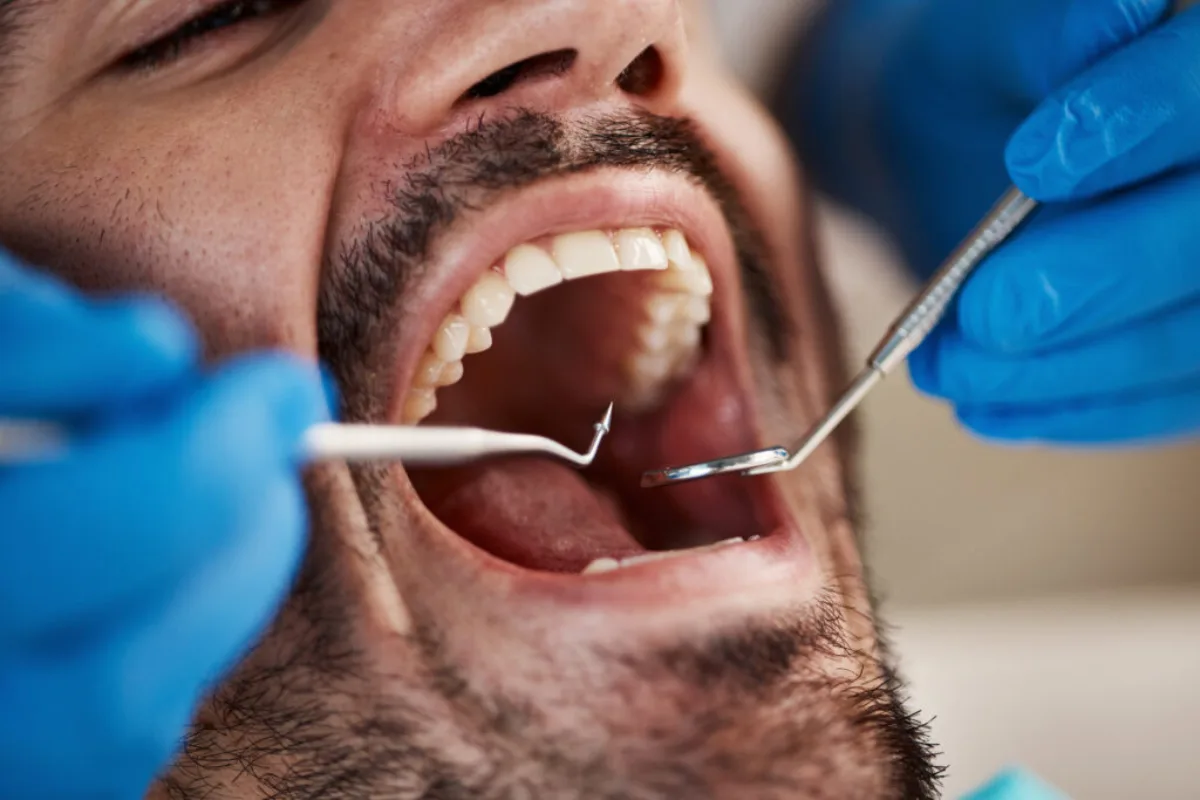
The main aim is to remove the source of the infection and stop it spreading. To do that, the dentist first examines your mouth and, where needed, uses an X-ray.
The treatment depends on the source of the infection and the state of the tooth.
If the infection comes from inside the tooth and the tooth can be saved, root canal treatment may be done. The infected tissue is cleaned out, the canals are disinfected and they are filled with suitable materials.
Sometimes the built-up pus needs to be drained. The dentist plans this according to where the abscess is and the state of the infection.
If a tooth is badly damaged and can’t be saved, extraction may be considered. How the gap is dealt with afterwards can be planned around the patient’s mouth and needs.
Antibiotics aren’t a stand-alone treatment used routinely for every abscess. If the infection is spreading or there are certain general symptoms, the dentist may plan medication when it’s judged necessary.
Does a Tooth Abscess Hurt?
An abscess often causes pain. How strong it is depends on where the infection is and how far it has progressed.
Some people feel constant throbbing; others only notice tenderness when chewing. The pain can sometimes spread to the jaw, ear or neck.
One important point, though: pain getting better or disappearing doesn’t necessarily mean the infection has gone. Pain can ease while the infection continues, because the nerve tissue has been affected.
So even if the toothache goes away by itself, don’t skip the dentist, especially if swelling or a bad taste continues.
What Can You Do at Home?
Whatever you do before you reach a dentist can only give temporary relief. Home measures don’t remove the cause of the abscess.
In the meantime, it helps to keep your mouth clean, avoid very hot or very cold food, and not irritate the area.
If your face is swollen, a cold compress can be applied from the outside. For pain, use medicines suitable for your health, on the advice of a doctor or pharmacist.
One important thing: never put aspirin or similar medicines directly on the tooth or gum. That can damage the soft tissue in your mouth.
Trying to squeeze, pierce or drain an abscess at home also risks spreading the infection.
Aftercare
Looking after your mouth after treatment supports healing and lowers the risk of the same problem coming back.
Brushing regularly and cleaning between your teeth properly helps reduce bacterial plaque. Pay particular attention to hygiene around the treated area.
After treatment:
- Follow your dentist’s advice.
- Take prescribed medication as directed.
- If there’s marked sensitivity or severe pain in the treated area, get it checked.
- Keep up your regular oral care.
- Don’t miss your follow-up appointments.
To stop an abscess coming back, it’s also important to treat cavities and gum problems early.
How Long Does an Abscess Take to Heal?
Healing time varies with how severe the infection is, where it is and the treatment used.
In some patients, symptoms begin to ease soon after the source of infection is removed. With advanced infections, though, healing can take longer and further treatment may be needed.
What matters isn’t only that the pain or swelling goes down. The underlying problem that caused the infection has to be treated properly too.
For example, if the source is deep decay, waiting for the pain to pass isn’t enough. The tooth may need root canal treatment, a restoration or, in some cases, another approach.
So recovery after an abscess should be assessed individually.
Tooth Abscess Treatment in Bağcılar
If you have tooth pain, facial swelling or signs of infection in the gum, a thorough dental examination is important to find the cause.
At Ayla Dent, the cavities, root canal infections and gum problems that can cause an abscess are assessed in detail and a plan is made to suit you.
Where needed, the source of the infection is found with an X-ray and a clinical examination. If the tooth can be saved, suitable treatment options are considered; for badly damaged teeth, other plans can be made.
If you’re in or around Bağcılar with an abscess, severe tooth pain or swelling in the mouth, it’s important to be seen by a dentist without leaving it.

Frequently Asked Questions
1. Does a tooth abscess go away by itself?
Even if the pain or swelling eases at times, the source of the infection can remain. If you suspect an abscess, see a dentist.
2. What causes a tooth abscess?
The most common causes are advanced decay, broken or cracked teeth, root canal infections and gum disease.
3. Is a tooth abscess dangerous?
Untreated infections can spread to surrounding tissue. Swelling that grows quickly, fever, or difficulty swallowing or breathing may need urgent assessment.
4. Can antibiotics cure a tooth abscess?
Antibiotics may be needed in some cases, but on their own they don’t remove the source of the infection. Your dentist should decide what treatment is needed.
5. Is root canal treatment used for an abscess?
If the infection comes from the inner tissue of the tooth and the tooth can be saved, root canal treatment can be done.
6. Why does abscess pain throb?
The pressure from the infection and the effect on surrounding tissue can cause throbbing pain.
7. Can an abscess cause facial swelling?
Yes. Swelling can appear in the cheek or jaw, especially when the infection spreads to the surrounding tissue.
8. Is the tooth extracted when there’s an abscess?
Depending on the tooth’s condition and how far the infection has spread, extraction can be a treatment option. The dentist decides after examination.
9. Should I apply heat to an abscess?
What’s appropriate when there’s swelling and infection varies from person to person. If the swelling is noticeable, it’s better to have a professional assessment.
10. When should I get emergency help?
If you have rapidly growing swelling of the face or neck, a high fever, or trouble swallowing or breathing, go to emergency care without delay.