
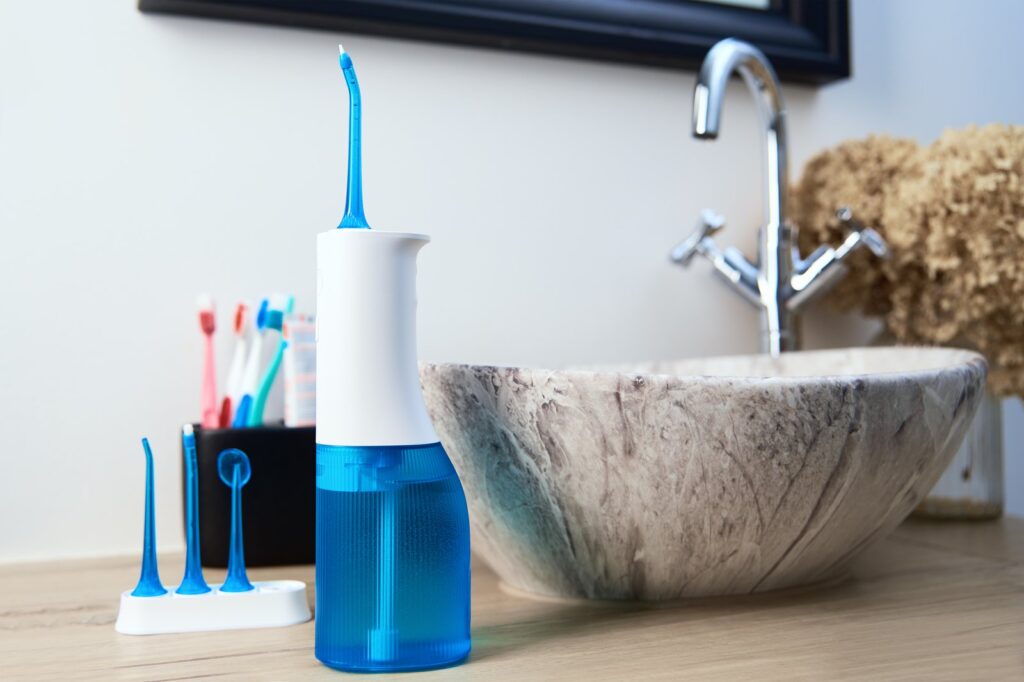
A water flosser, also called an oral irrigator, uses a pressurised stream of water to clean between the teeth and along the gum line.
A water flosser can support brushing and interdental cleaning. It does not always replace floss or interdental brushes for removing plaque.
How Does a Water Flosser Work?
Water from a reservoir is pumped through a thin tip under pressure. The stream flushes food debris from between the teeth and along the gum line.
Most devices have adjustable pressure and different tips, including tips designed for braces and implants.
Benefits
- It can be easier than floss for some people.
- It can help flush debris around braces, bridges and implants.
- It is easy to use if your hand dexterity is limited.
- It cleans gently along the gum line.
Limitations
The water stream flushes away loose debris. It does not mechanically wipe away plaque that is stuck to the teeth.
A 2019 Cochrane review found that adding a water flosser to brushing may reduce gum inflammation at one month. No difference was shown at three or six months, and plaque was not reduced more than with brushing alone. The certainty of the evidence was rated low to very low.
Does a Water Flosser Replace Floss?
| Feature | Water flosser | Floss | Interdental brush |
|---|---|---|---|
| How it cleans | Water stream | Mechanical wiping | Mechanical brushing |
| Sticky plaque | Limited effect | Removes it | Removes it |
| Ease of use | Easy | Needs technique | Moderate |
| Around braces and implants | Can help | Special floss needed | Often suitable |
For most people, a water flosser works best alongside floss or interdental brushes. If you cannot use floss or brushes, a water flosser may be an option. Decide this with your dentist.
Other tools: How to Floss Your Teeth · Interdental Brushes
How to Use a Water Flosser
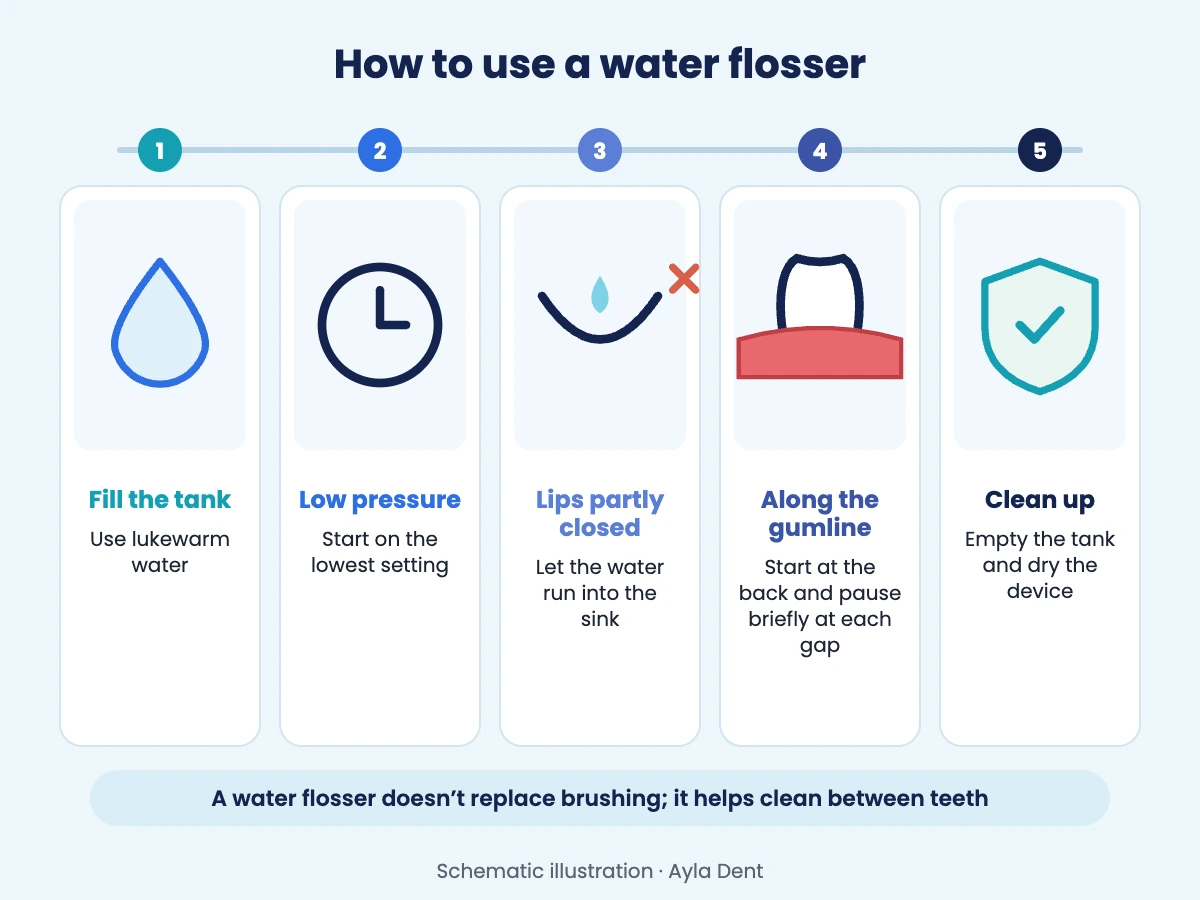
- Fill the reservoir with lukewarm water.
- Start on the lowest pressure setting.
- Place the tip in your mouth and keep your lips slightly closed so the water can drain into the sink.
- Aim the tip at the gum line.
- Start at the back teeth and pause briefly at each gap.
- Empty the reservoir and let the device dry after use.
Clean the reservoir and tip regularly, and replace tips as the manufacturer advises.

Braces and Implants
Brackets, bridges and implant crowns trap debris easily. A water flosser can help flush these areas.
Keeping the area around implants clean helps lower the risk of inflammation: Peri-Implantitis: Signs and Treatment
Frequently Asked Questions
Can a water flosser damage the gums?
Used at a suitable pressure, it is usually well tolerated. Start low and increase gradually.
Can I put mouthwash in a water flosser?
Some devices allow it and some do not. Follow the manufacturer’s instructions and your dentist’s advice.
Does a water flosser remove tartar?
No. Hardened tartar can only be removed professionally: Scaling and Cleaning
How often should I use it?
Usually once a day. Your dentist may suggest a different routine for you.
Conclusion
A water flosser is an easy-to-use aid for cleaning between the teeth. It does not always replace floss or interdental brushes for removing sticky plaque, but it can be a useful extra, especially with braces, implants or bridges.
This article is for general information only and does not replace personal diagnosis or treatment advice.
Sources
- Worthington HV et al. – Home use of interdental cleaning devices, in addition to toothbrushing, for preventing and controlling periodontal diseases and dental caries. Cochrane Database of Systematic Reviews, 2019: https://www.cochranelibrary.com/cdsr/doi/10.1002/14651858.CD012018.pub2/information
- NHS – How to keep your teeth clean: https://www.nhs.uk/live-well/healthy-teeth-and-gums/how-to-keep-your-teeth-clean/