
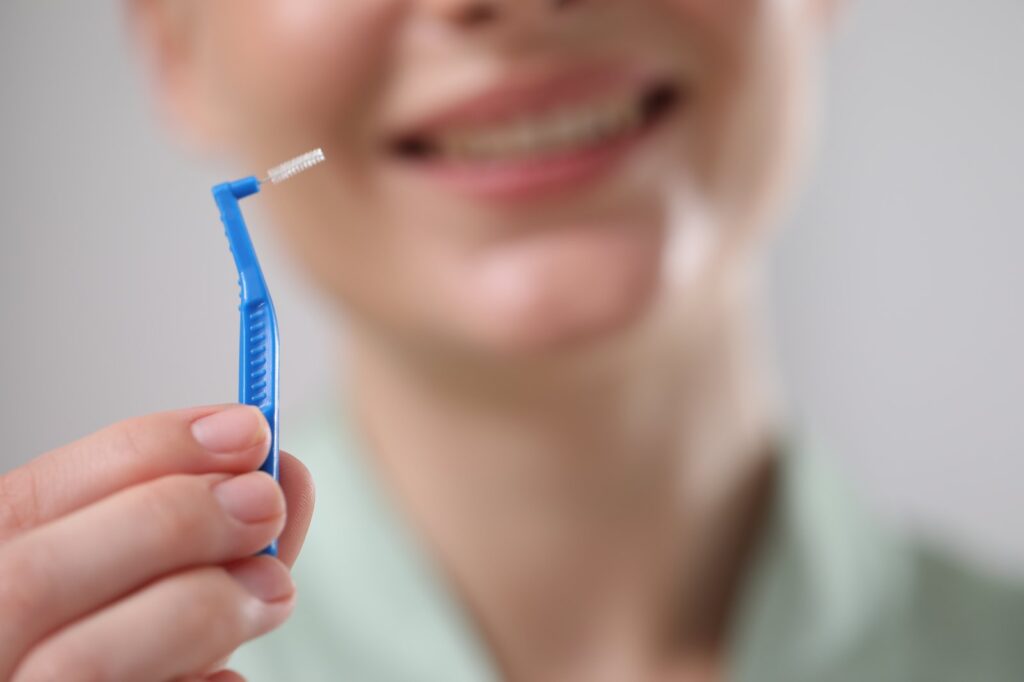
An interdental brush is one of the tools you can use to clean between your teeth.
It is a small cylindrical or tapered brush that fits into the gap between two teeth. It can make cleaning easier, especially if your gaps are wider or you have implants, a bridge or braces.
What Does an Interdental Brush Do?
It removes plaque and food from between the teeth, and it touches a larger surface than floss.
A 2019 Cochrane review found that interdental brushes may reduce gum inflammation more than floss. The review rated the certainty of this evidence as low.
Who Should Use Interdental Brushes?
They may be recommended if you:
- Have wider gaps between your teeth
- Have gaps that opened up because of gum recession
- Have dental implants
- Have a bridge
- Wear fixed braces
- Find floss difficult to use
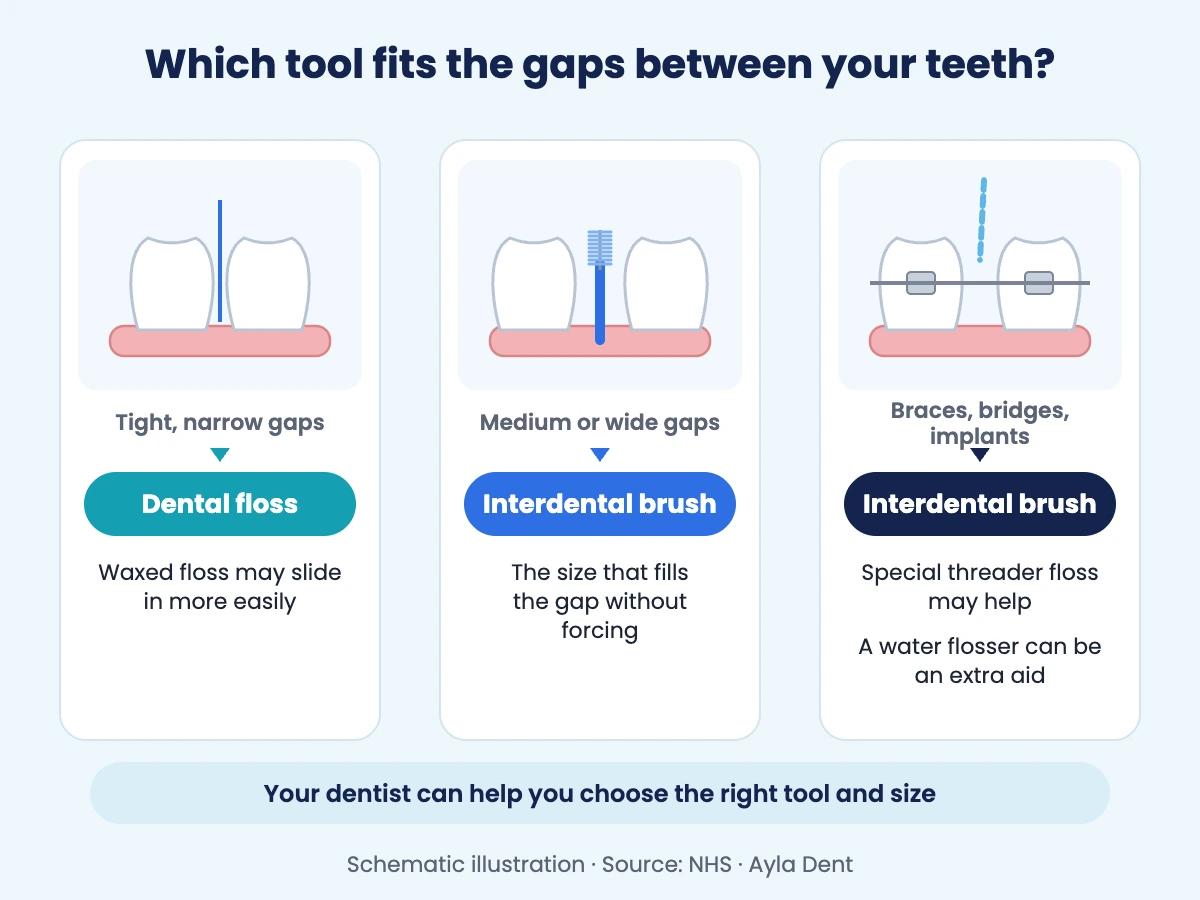
In very tight gaps, the brush may not fit. Floss may be the better choice there.
Choosing the Right Size
Interdental brushes come in different widths. The right size fills the gap without being forced.
- If the brush has to be forced or the wire bends, try a smaller size.
- If it moves loosely in the gap, you may need a larger one.
- Different parts of your mouth may need different sizes.
Choosing your first sizes with your dentist or hygienist makes it easier to get this right.
How to Use an Interdental Brush
- Pick a brush that fits the gap.
- Gently insert it between the teeth, close to the gum line.
- Move it back and forth a few times.
- Never force it. If it will not go in, use a smaller size.
- Rinse the brush with water after each gap.
- Replace the brush when the wire bends or the bristles splay.
Cleaning between your teeth once a day is recommended.
Floss or Interdental Brush?
| Feature | Floss | Interdental brush |
|---|---|---|
| Best for | Narrow, tight gaps | Medium and wide gaps |
| Ease of use | Needs technique | Easier for most people |
| Around implants and bridges | Special floss may be needed | Often suitable |
| Braces | Special floss needed | Can be used between brackets |
Many people use both: floss for tight gaps and interdental brushes for wider ones. Your dentist can suggest the combination that suits you.
How to floss: How to Floss Your Teeth
Implants and Braces
Plaque build-up is one of the main causes of inflammation around implants. Interdental brushes can help clean under and around an implant crown or bridge.
More on this: Peri-Implantitis: Signs and Treatment
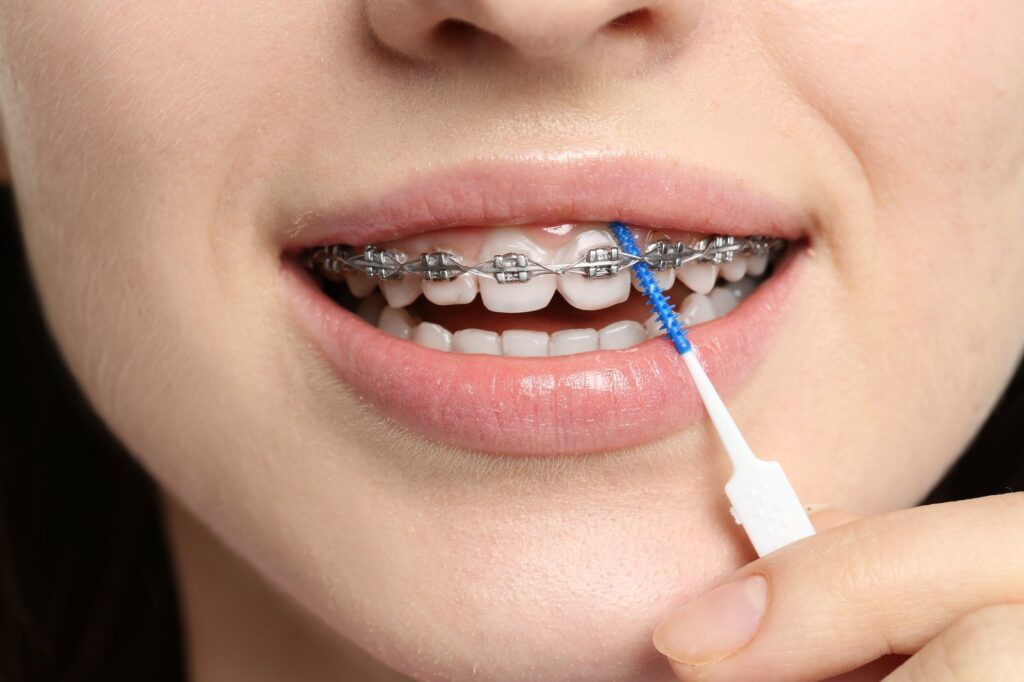
Braces and wires trap plaque easily, and interdental brushes can help clean around them. Cleaning between your teeth is important throughout orthodontic treatment.
Frequently Asked Questions
Do interdental brushes widen the gaps?
Not when you use the right size and don’t force it. As gum inflammation settles and swelling goes down, gaps can look more noticeable.
Is it normal for gums to bleed?
Slight bleeding is common in the first days and usually settles with regular use. Bleeding that continues should be checked: Bleeding Gums: Causes and What to Do
How often should I replace them?
When the wire bends or the bristles wear. How quickly that happens depends on how often you use them.
Can a water flosser replace interdental brushes?
A water flosser is a helpful extra. Whether it can replace brushes depends on the person: Water Flossers: Do They Replace Floss?
Conclusion
Interdental brushes make cleaning between the teeth easier, especially for wider gaps and around implants, bridges and braces. Choosing the right size and using them gently are key.
This article is for general information only and does not replace personal diagnosis or treatment advice.
Sources
- NHS – How to keep your teeth clean: https://www.nhs.uk/live-well/healthy-teeth-and-gums/how-to-keep-your-teeth-clean/
- Worthington HV et al. – Home use of interdental cleaning devices, in addition to toothbrushing, for preventing and controlling periodontal diseases and dental caries. Cochrane Database of Systematic Reviews, 2019: https://www.cochranelibrary.com/cdsr/doi/10.1002/14651858.CD012018.pub2/information