
After dental implant surgery, most people want to know three things: how long the pain lasts, when the swelling goes down and what they can eat in the first few days.
Pain, swelling and tenderness are normal parts of healing after implant surgery. They are usually strongest in the first few days and then ease. How long they last depends on the extent of the procedure, your general health and how you heal.
For an overview of implant treatment, see our dental implants page.
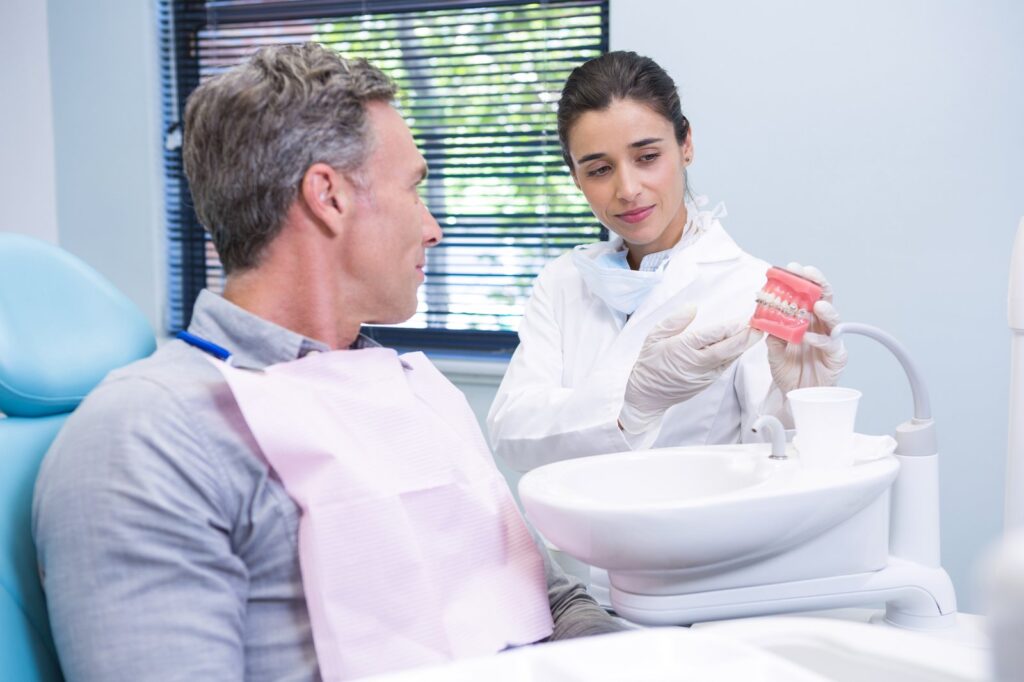
Is Pain After an Implant Normal?
An implant is an artificial tooth root placed in the jawbone. Because the gum and surrounding tissue are involved, some pain, tenderness and mild swelling are common afterwards.
Mild to moderate pain that starts when the local anaesthetic wears off is expected in the first days.
Not everyone feels the same. Healing after a single implant is usually different from healing after several implants or a bone graft.
How Long Does the Pain Last?
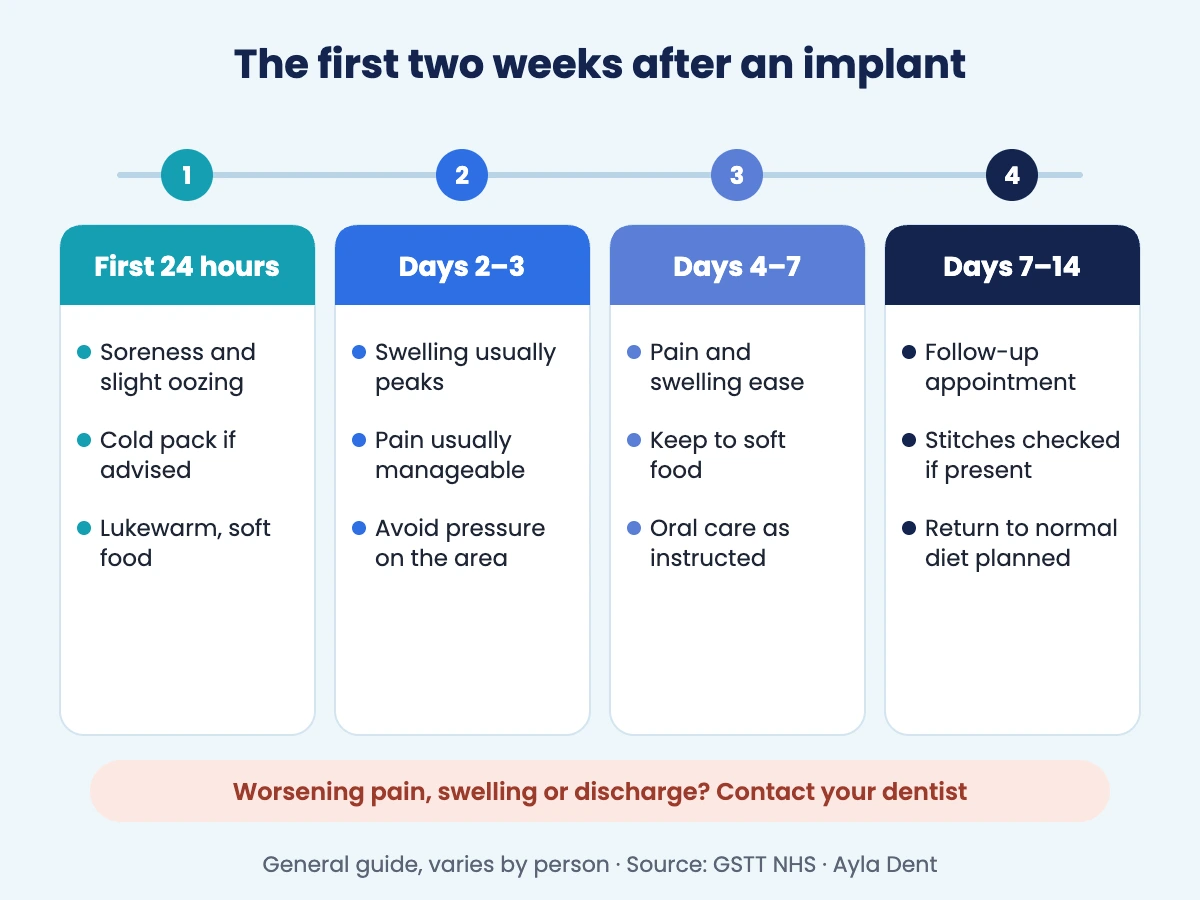
Pain is usually most noticeable in the first 24–72 hours and should ease gradually over the first week. Some people stay tender for a little longer.
What matters is not just how many days it lasts, but which way it is heading. Pain that gets worse instead of better, becomes severe or comes with new symptoms should be checked.
The First 24 Hours
Once the anaesthetic wears off, the area may feel sore. A little oozing of blood is also common. Follow your dentist’s aftercare and medication instructions.
Days 2 and 3
Swelling and tenderness often peak around now. Pain is usually manageable.
Days 4 to 7
When healing goes smoothly, pain and swelling should be settling.
These timings are a general guide, not a personal recovery plan. They can differ after more extensive surgery.
When Does the Swelling Go Down?
Swelling is the body’s natural response to surgery. It usually peaks on day two or three and then starts to go down. Some people also have mild bruising on the face.
The more extensive the surgery, the more swelling there may be: several implants, a bone graft or a sinus lift can all mean more.
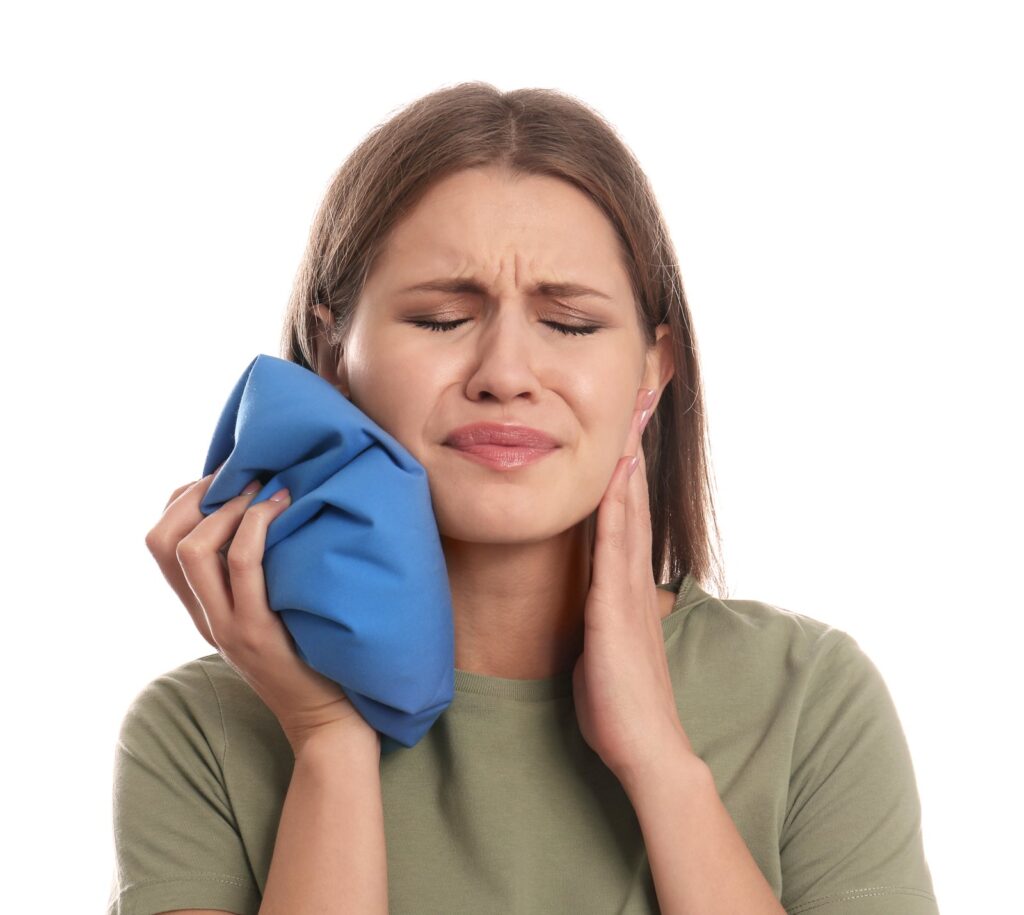
If your dentist recommends it, a cold pack wrapped in a cloth can help in the first hours. Never put ice directly on the skin. One NHS hospital leaflet, for example, suggests 10 minutes every hour for the first 6 hours.
Swelling that keeps growing, becomes hard, or comes with redness or fever is not part of normal healing.
What Can You Eat After a Dental Implant?
Do not eat until the anaesthetic has worn off. You could bite your lip, cheek or tongue without noticing.
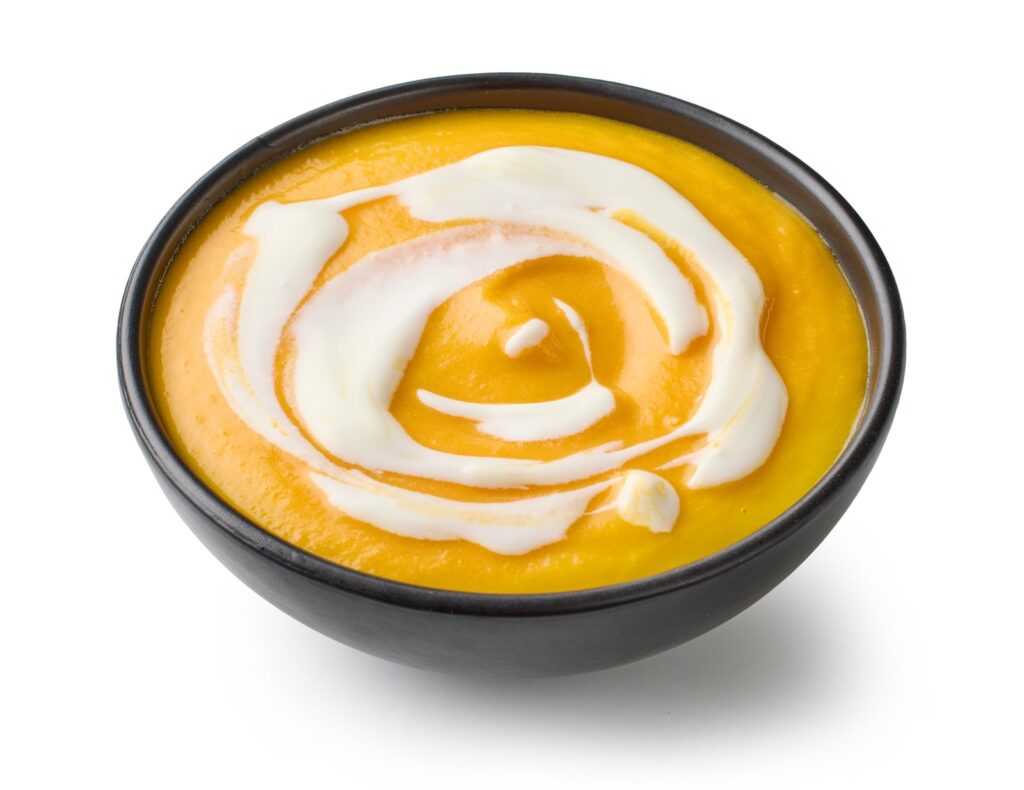
In the first days, choose lukewarm, soft foods that do not put pressure on the area:
- Yoghurt, smoothies, custard
- Soup (not too hot)
- Mashed potatoes, eggs
- Well-cooked pasta or rice
- Soft fruit such as bananas
For a while, it helps to avoid:
- Very hot food and drinks
- Hard, crunchy or chewy food (nuts, crisps, crusty bread)
- Small bits that can get stuck in the area (seeds)
- Spicy or acidic food
- Alcohol
Chew on the other side if you can. Your dentist will tell you when you can go back to a normal diet.
Looking After Your Mouth
Keeping your mouth clean is part of healing, but the surgical area should not be disturbed in the first days.
- Brush your other teeth as usual.
- Your dentist will tell you when and how to clean the implant area.
- Use any recommended mouthwash exactly as instructed.
- Avoid vigorous rinsing in the first hours.
- Any stitches are checked at your follow-up appointment.
In the long term, cleaning around the implant every day helps lower the risk of peri-implantitis.
Smoking and Alcohol
Smoking can slow healing in the mouth. Stopping before and after surgery is strongly advised.
Avoid alcohol in the early healing period too. It can also interact with medicines you have been given.
How to Ease the Pain
- Take the medicines your dentist prescribes or recommends, as directed
- Avoid putting pressure on the area in the first days
- Use a cold pack if your dentist recommends it
- Keep up the oral hygiene routine you were given
- Take a short break from strenuous exercise
Not every painkiller suits everyone. If you have stomach, kidney or liver problems, or take other medicines, do not choose a painkiller yourself.
Signs That Are Not Normal
Expected soreness is different from pain caused by a complication. Contact your dentist promptly if you notice:
- Pain that keeps getting worse
- Increasing swelling and redness
- Pus or discharge around the implant
- Fever or feeling generally unwell
- A loose feeling in the implant
- Bleeding that does not stop with pressure
Difficulty breathing or swallowing needs emergency care.
Frequently Asked Questions
Can implant pain last a week?
Some tenderness can last about a week. Pain that is getting worse or is severe is not normal.
Is throbbing normal after an implant?
A throbbing feeling can occur in the first days. Severe, constant or worsening throbbing should be checked.
When can I go back to work?
Many people return to daily life quickly. It depends on the extent of the surgery and how physical your job is.
Can I drink hot drinks after an implant?
In the first days, let hot drinks cool to lukewarm.
Can I use a straw?
Sucking through a straw can put pressure on the area early on. Follow your dentist’s advice.
Conclusion
Mild to moderate pain and swelling are common in the first days after implant surgery and should ease with time. Soft food, the oral care your dentist recommends and staying away from smoking all make this period easier.
Healing is personal. The aftercare instructions you are given after your procedure always come first.
This article is for general information only and does not replace an examination, diagnosis or personal treatment advice.
Sources
- Guy’s and St Thomas’ NHS Foundation Trust – After having a dental implant: https://www.guysandstthomas.nhs.uk/health-information/dental-implants/after-having-dental-implant
- Cambridge University Hospitals – Insertion of dental implants: https://www.cuh.nhs.uk/patient-information/insertion-of-dental-implants/
- American Dental Association – Oral analgesics for acute dental pain: https://www.ada.org/resources/ada-library/oral-health-topics/oral-analgesics-for-acute-dental-pain