
Do you wake up with a tired jaw, sensitive teeth or an ache around your temples? One possible reason is that you clench or grind your teeth without realising it.
Bruxism is the medical term for repetitive jaw-muscle activity that involves clenching or grinding the teeth, either during sleep or while awake. Not every case is a problem that needs treatment. When it is frequent or forceful, though, it can wear down teeth, strain the chewing muscles and damage fillings or crowns.
What Is Bruxism?
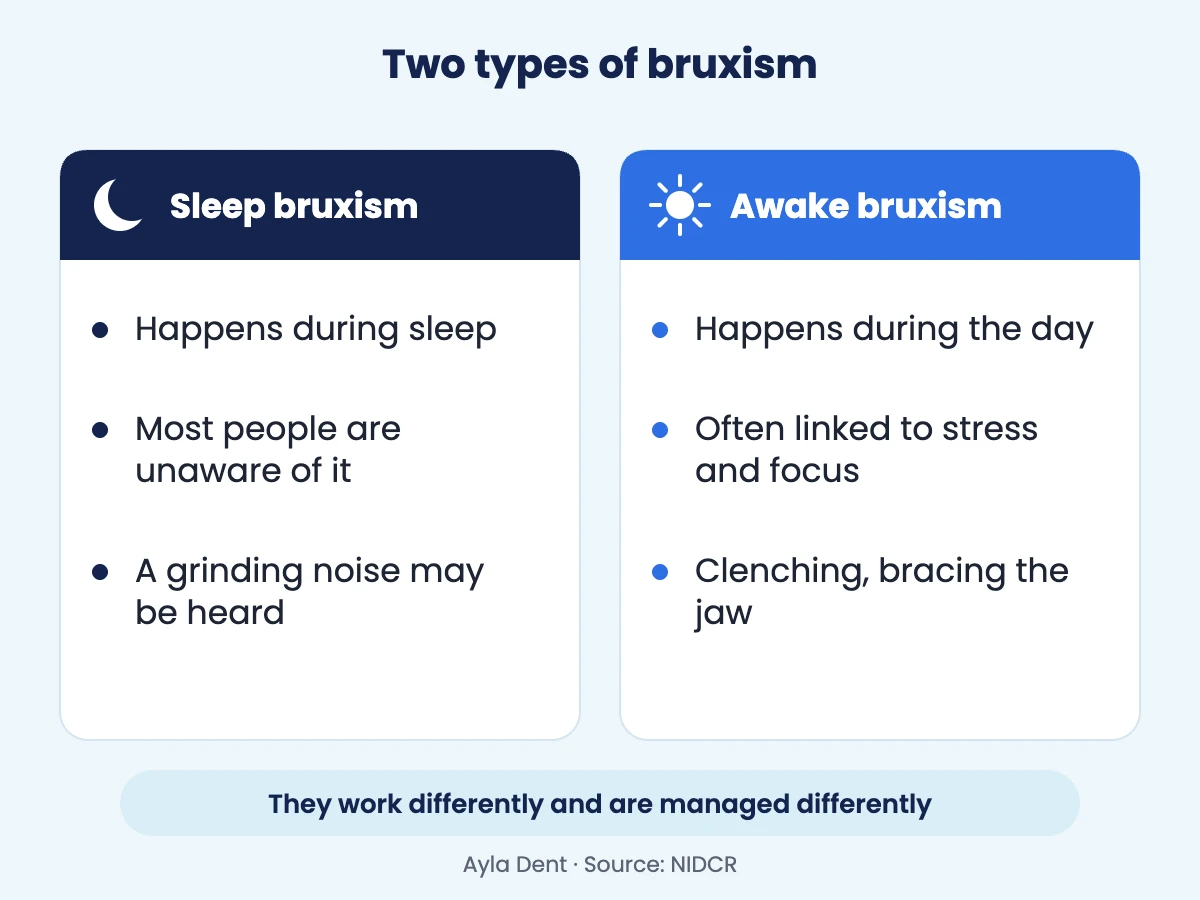
Researchers usually separate bruxism into two types, because they behave differently and are managed differently.
Sleep bruxism: Clenching or grinding that happens during sleep. Most people are unaware of it. It is often a partner or family member who first hears the grinding sound.
Awake bruxism: Clenching, bracing or tensing the jaw during the day, often while concentrating, working at a screen or under stress. Awake bruxism is more common than sleep bruxism, according to the US National Institute of Dental and Craniofacial Research (NIDCR).
Bruxism Symptoms
Signs that may point to bruxism include:
- Jaw stiffness or muscle fatigue in the morning
- Worn, flattened, chipped or cracked teeth
- Increased tooth sensitivity
- Pain around the temples or a dull headache
- Tension in the chewing muscles
- A grinding noise at night
- Discomfort around the jaw joint in some people
None of these signs proves bruxism on its own. Tooth wear, for example, can come from grinding years ago or from acid erosion, so a dentist looks at the whole picture rather than a single symptom.
What Causes Teeth Grinding?
There is no single cause. Sleep, the nervous system, emotional factors and lifestyle can all play a part.
Stress and Anxiety
Stress and anxiety are closely linked with awake bruxism. Many people notice they clench their teeth during intense work or difficult moments.

Sleep Problems
Sleep bruxism can occur alongside snoring, fragmented sleep and obstructive sleep apnoea. These conditions do not appear in every patient, and one should not be assumed to cause the other. If sleep apnoea is suspected, a sleep study may be recommended.
Medication and Lifestyle
NIDCR lists alcohol, caffeine and smoking among the factors associated with bruxism, together with certain medicines used for depression, seizures and ADHD. Never stop a prescribed medicine on your own; talk to the doctor who prescribed it first.
Is It Caused by a Bad Bite?
For many years, an uneven bite was seen as the main cause of grinding. Current research does not support this. Bruxism is now understood to be regulated mainly by the central nervous system rather than by how the teeth fit together.
How Is Bruxism Diagnosed?
A dentist combines your description of the symptoms with what they see in the mouth: wear patterns on the teeth, damaged restorations, tenderness in the jaw muscles and how the jaw moves. For suspected sleep bruxism, your sleep history matters too.
When needed, a sleep medicine assessment or an overnight sleep study (polysomnography) can confirm sleep bruxism or identify related conditions such as sleep apnoea.
How Is Bruxism Treated?
Bruxism treatment is not the same for everyone. The aim is to ease symptoms and limit damage to the teeth, not to “switch off” the habit completely.
1. Custom Night Guard
A night guard made by a dentist to fit your teeth keeps the upper and lower teeth apart during sleep. It helps protect against wear and fractures. It does not stop the grinding itself.
Read more: Night Guard for Teeth Grinding: What It Does and How to Use It
2. Habit Awareness and Relaxation
Learning to notice when you clench during the day, relaxing the jaw on purpose and managing stress can help, especially with awake bruxism. At rest, your lips can be lightly closed while your teeth stay slightly apart.
3. Better Sleep Habits
Regular sleep times, less caffeine in the evening and checking for sleep problems can all be part of managing sleep bruxism.
4. Jaw Muscle and Joint Assessment
If you have jaw pain, limited opening or tender muscles, the temporomandibular joint (TMJ) and chewing muscles may need a separate assessment.
Read more: TMJ Disorder: Symptoms, Jaw Clicking and Joint Position
5. Botulinum Toxin
Researchers are studying how botulinum toxin injections affect the chewing muscles. The evidence on effectiveness, long-term safety and which patients might benefit is still uncertain, so it is not a standard treatment for everyone with bruxism.
Read more: Botox for Bruxism: What the Research Shows

What Happens If Bruxism Is Not Treated?
Not every case gets worse over time. In people with frequent, forceful clenching or grinding, however, tooth wear, broken fillings or crowns and muscle pain can develop. That is why the duration, intensity and effect on the teeth are assessed together.
Frequently Asked Questions
Does bruxism go away on its own?
Bruxism activity can change over time, and mild cases may not need treatment. If there is pain or visible damage to the teeth, an assessment is worthwhile.
Can teeth grinding cause headaches?
Bruxism involving the chewing muscles can come with pain around the temples in some people. Not every headache is caused by grinding, though.
Does bruxism only happen at night?
No. It can happen during sleep and while awake, and the two forms are managed differently.
Which doctor treats bruxism?
A dentist can examine the teeth, jaw muscles and joint. When needed, they may refer you to other specialists, for example for a sleep assessment.
Conclusion
Bruxism is jaw-muscle activity with several possible contributing factors. If you notice tooth wear, morning jaw fatigue or recurring pain, a full assessment is more useful than focusing on the grinding alone.
This article is for general information only and does not replace a diagnosis or treatment plan.
Grinding can shorten the life of crowns and veneers. See dental veneers and zirconia crowns for more.
Sources
- NIDCR – Bruxism: https://www.nidcr.nih.gov/health-info/bruxism
- NIDCR – Ask the Expert: Bruxism: https://www.nidcr.nih.gov/health-info/bruxism/ask-expert-bruxism-tooth-grinding
- NHS – Teeth grinding (bruxism): https://www.nhs.uk/symptoms/teeth-grinding/
- Lobbezoo F, Naeije M. Bruxism is mainly regulated centrally, not peripherally. Journal of Oral Rehabilitation, 2001: https://pubmed.ncbi.nlm.nih.gov/11874505/