
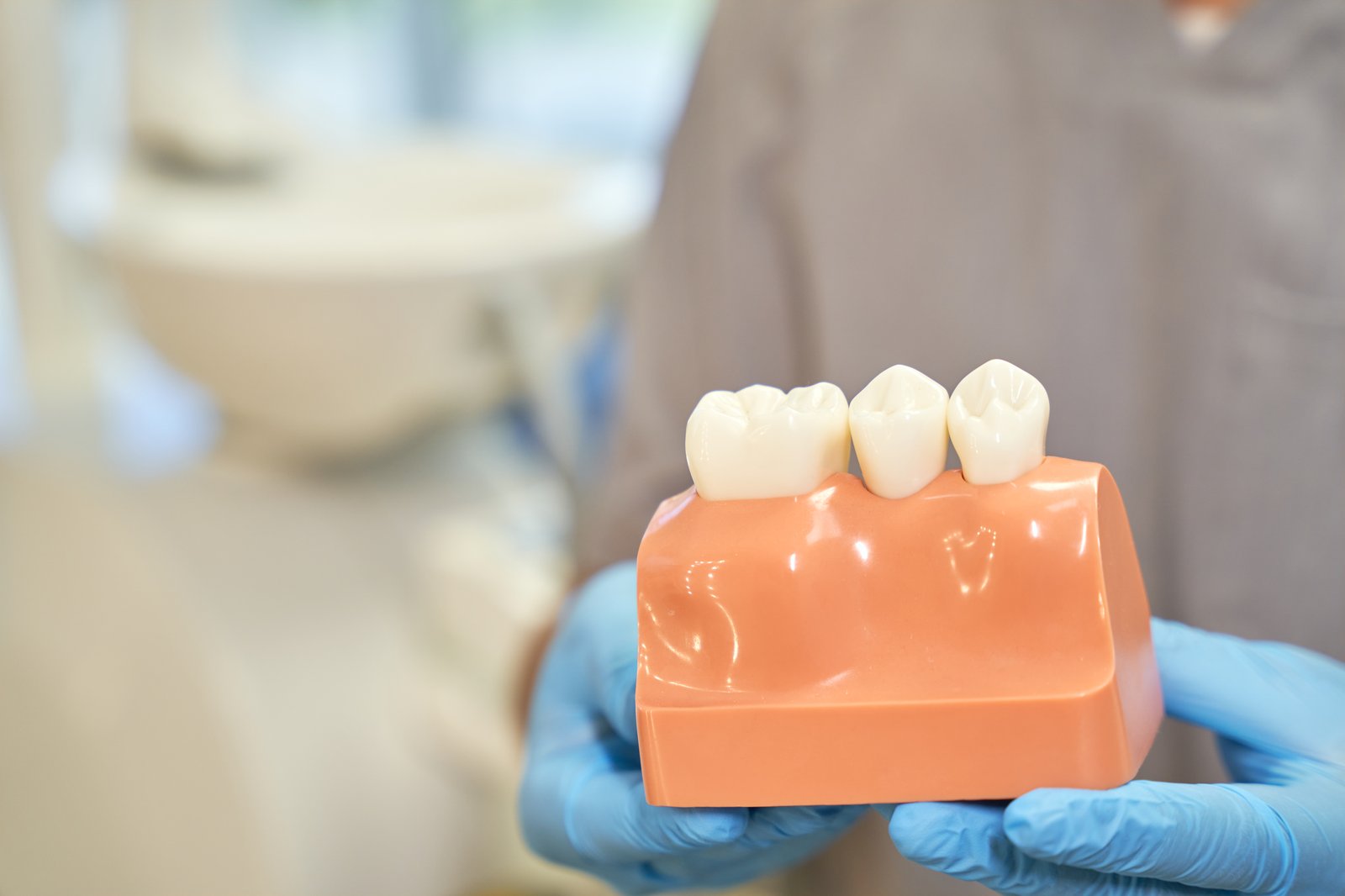
A zirconia crown is a cap that fits over a damaged, weakened or discoloured tooth to protect it and restore its shape. It contains no metal, it’s strong, and it can be made in a shade close to natural teeth, which is why it’s used on both front and back teeth.
A zirconia crown is a metal-free ceramic crown that is tooth-coloured and strong enough for chewing forces. But not all zirconia is the same. The type used depends on where the tooth is, how your teeth bite together and how natural it needs to look.
This guide explains what zirconia is, when it’s used, what the latest research shows and what affects how long a crown lasts. For an overview of all crown types, see our article What Is a Dental Crown?
What Is a Zirconia Crown?
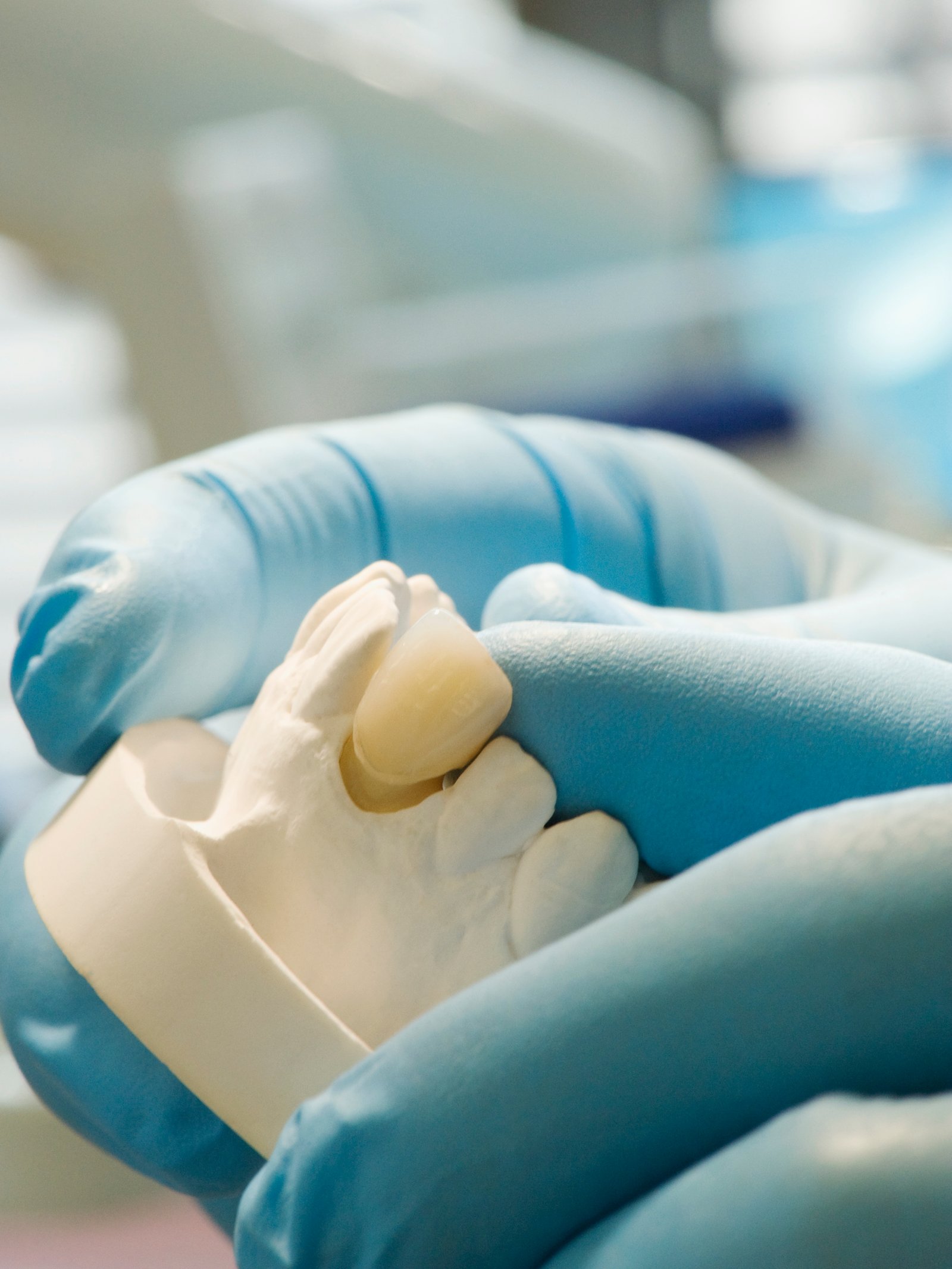
Dental zirconia is a ceramic based on zirconium dioxide. Your crown is milled from a block of zirconia by computer-guided machines, using a digital scan or an impression of your tooth.
There are two main designs:
- Monolithic zirconia: the whole crown is made from one piece of zirconia, with no porcelain layer on top.
- Layered (veneered) zirconia: a porcelain layer is added over a zirconia base to improve appearance.
The difference matters. With layered crowns, most problems come from the top porcelain layer chipping. Monolithic crowns have no such layer, so they chip far less often.
When Is a Zirconia Crown Used?
A zirconia crown may be considered for:
- Teeth that are broken, heavily filled or weakened
- Teeth that need protecting after root canal treatment
- Bridges to replace missing teeth
- Crowns and bridges on dental implants
- Teeth whose colour or shape can’t be improved in a less invasive way
If only the front surface of a tooth needs an aesthetic change, options that remove less tooth, such as veneers or bonding, may come first.
Types of Zirconia: Strength vs Appearance
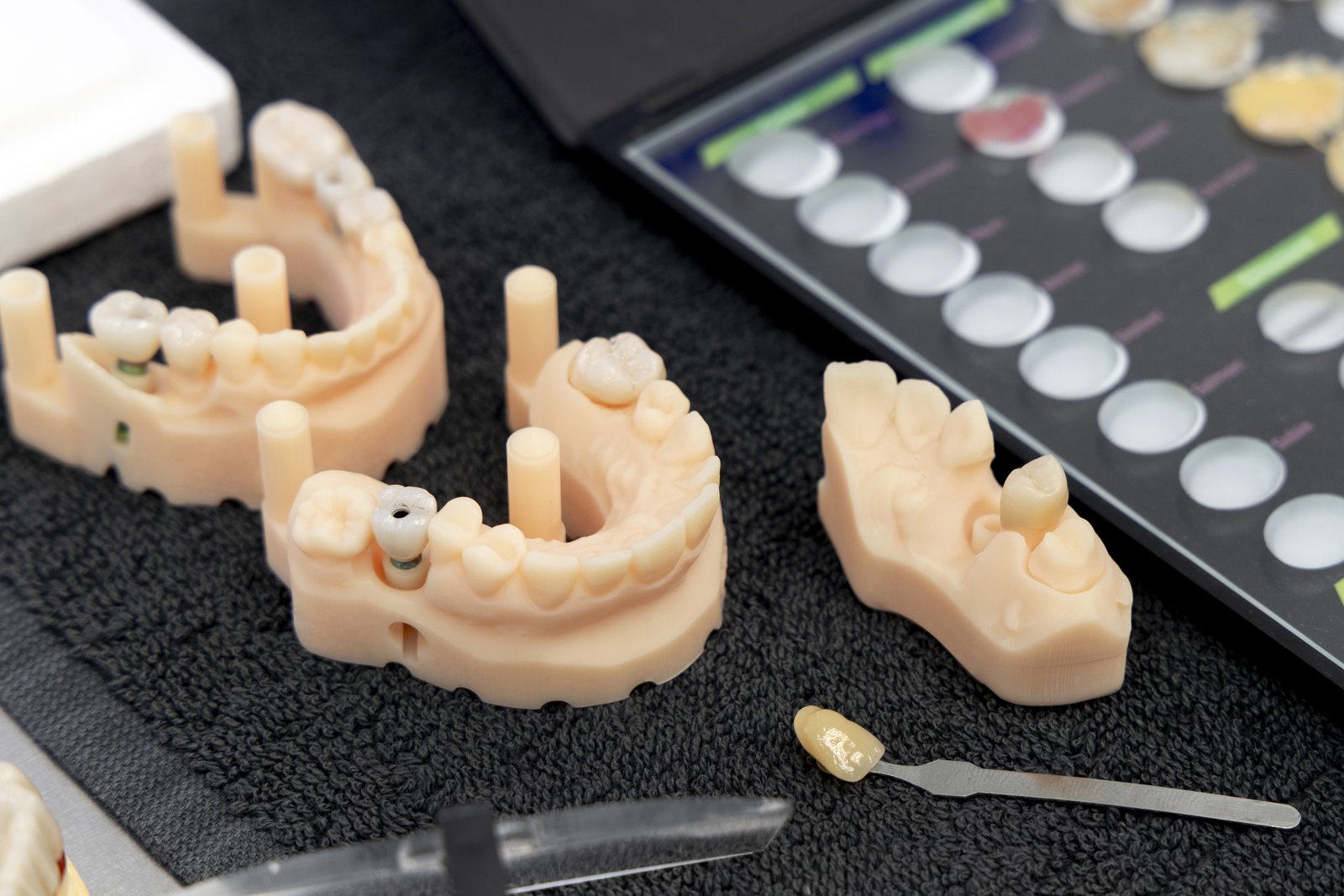
Dental zirconia comes in different formulations, usually called 3Y, 4Y and 5Y.
- 3Y zirconia: the strongest, but the least translucent. Mostly used on back teeth, where biting forces are highest.
- 4Y zirconia: a balance between strength and appearance.
- 5Y zirconia: lets more light through and looks more like a natural tooth, but it’s weaker. It’s mainly used on front teeth.
In short, the more translucent the zirconia, the lower its strength. One review reports that 5Y zirconia is 20–25% more translucent than 3Y but 40–50% lower in flexural strength (Kongkiatkamon et al., 2023). Highly translucent zirconia may not fully hide a tooth that has darkened after root canal treatment.
What Does the Research Say?
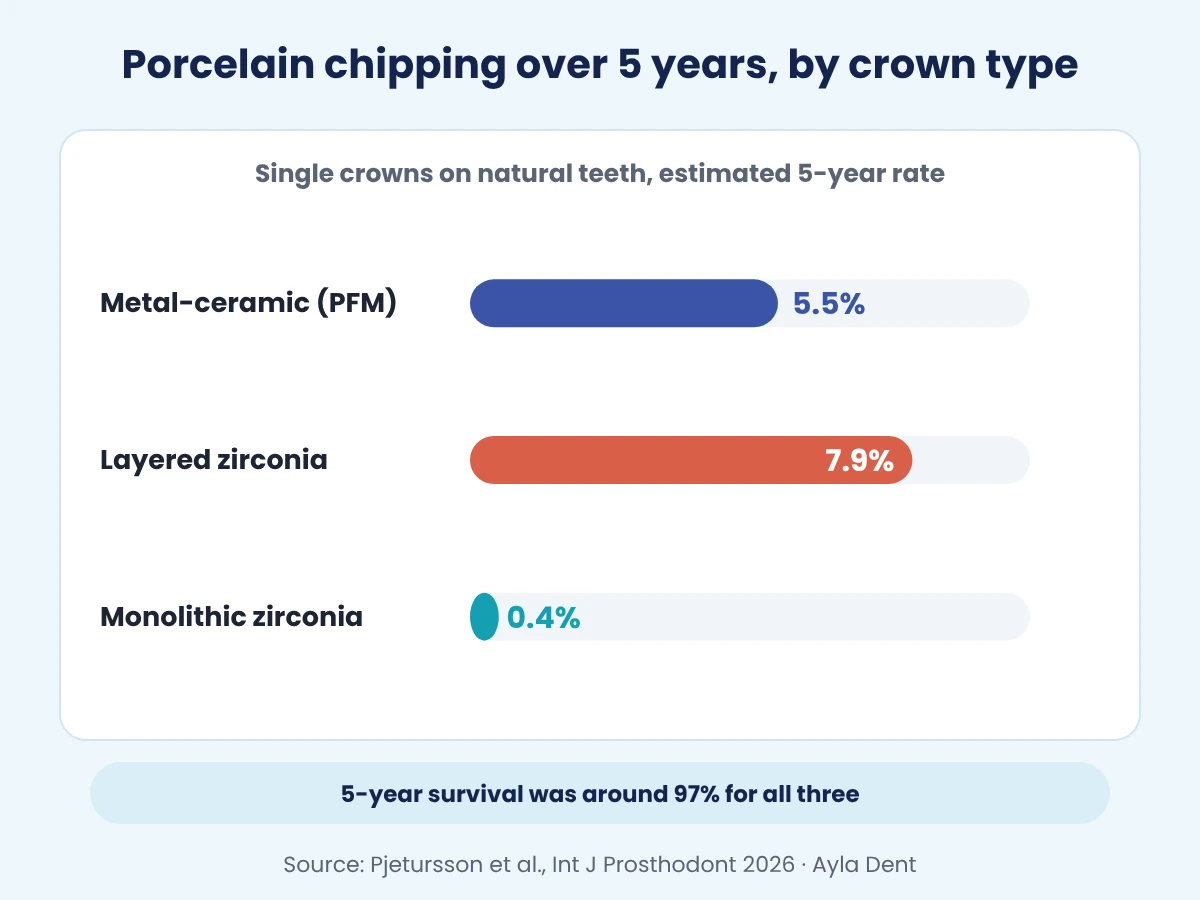
Some of the most up-to-date evidence comes from a 2026 systematic review and meta-analysis in the International Journal of Prosthodontics (Pjetursson et al.). For single crowns on natural teeth, the estimated 5-year survival rates were:
- Porcelain-fused-to-metal: 97.1%
- Layered zirconia: 97.3%
- Monolithic zirconia: 96.8%
- Monolithic lithium disilicate glass-ceramic: 98.5%
The differences are small. The real difference is in chipping. Over 5 years, ceramic chipping or fracture was 5.5% for porcelain-fused-to-metal crowns, 7.9% for layered zirconia and just 0.4% for monolithic zirconia.
A companion 2026 meta-analysis on bridges (Romandini et al.) found 5-year survival of 91.3% for porcelain-fused-to-metal, 92.9% for layered zirconia and 87.9% for monolithic zirconia. The authors describe the survival rates as comparable and note that the monolithic figure is based on only three studies. Minor chipping was much lower with monolithic zirconia.
Older studies, especially on layered zirconia, reported more chipping and crowns coming loose (Sailer et al., 2015). Newer materials and monolithic designs appear to have reduced these problems.
Benefits and Limits
For suitable patients, zirconia offers:
- No metal, so no grey line at the gum edge
- High resistance to fracture in its monolithic form
- A colour close to natural teeth
It also has limits:
- The most translucent types are weaker, so their use on back teeth is limited.
- It may not fully mask a very dark tooth.
- It needs a specific bonding protocol to stay firmly in place.
- Some tooth structure has to be removed, and that can’t be reversed.
Does Zirconia Wear Down Opposing Teeth?
This is a common question. Research suggests that wear on the opposing tooth depends less on how hard zirconia is and more on how smooth its surface is. A well-polished zirconia surface causes less wear than a rough one.
That’s why the crown surface should be polished again after any bite adjustment.
Teeth Grinding and Zirconia Crowns
Clenching and grinding (bruxism) increase the forces on crowns and raise the risk of fracture. Monolithic zirconia, without a porcelain layer, is usually preferred for these patients, and a night guard may be recommended to protect both the crowns and the opposing teeth.
Learn more in What Is Bruxism? and Night Guard for Teeth Grinding.
How Is a Zirconia Crown Made?
- Exam and planning: the tooth, gums and bite are checked, with an X-ray if needed.
- Preparing the tooth: a small amount of tooth is removed to make room for the crown.
- Impression or scan: an impression or an intraoral digital scan is taken.
- Temporary crown: a temporary crown may protect the tooth while the final one is made.
- Try-in and fitting: fit, colour and bite are checked before the crown is bonded.
How Long Does a Zirconia Crown Last?
It depends on the type of zirconia, the condition of the tooth, your bite, any grinding habit and your oral hygiene. Five-year survival rates in research are high, but long-term results vary from person to person.
Habits that help a crown last:
- Brushing twice a day with fluoride toothpaste
- Cleaning the gum edge of the crown with floss or an interdental brush
- Not biting hard objects
- Wearing a night guard if you grind your teeth
- Going for regular dental check-ups
Zirconia itself can’t decay, but the natural tooth underneath can. Keeping the gumline clean helps prevent decay at the crown edge.
Frequently Asked Questions
Zirconia or porcelain crown?
Research shows similar 5-year survival for zirconia and porcelain-fused-to-metal crowns. Zirconia contains no metal, and in its monolithic form it chips much less. The choice depends on the tooth’s position, your aesthetic goals and your bite.
Does a zirconia crown damage the tooth?
Some tooth structure is removed for a crown, and that can’t be undone. That’s why a crown is planned only when it’s needed to protect the tooth. If a less invasive option is suitable, it’s considered first.
Will a zirconia crown change colour?
Whitening doesn’t change the colour of a crown. If you’re thinking about whitening, it’s easier to do it before the crown so the shade can be matched.
Is sensitivity normal after a zirconia crown?
Some sensitivity to hot and cold for a few days is possible. If it lasts, or if biting hurts, see your dentist.
Can zirconia crowns go on implants?
Yes. Zirconia is also used for crowns and bridges on dental implants.
Summary
A zirconia crown is a metal-free, strong, tooth-coloured option. Current research shows 5-year survival similar to porcelain-fused-to-metal crowns, with much less chipping in monolithic zirconia.
The right type and design depend on the tooth’s position, your bite, any grinding habit and your aesthetic goals.
This article is for general information. It does not replace an examination.
Sources
- Pjetursson BE, Pitta J, Balet A, Bjarnadottir GR, Sailer I, Romandini P. A Systematic Review and Meta-Analysis Evaluating the Survival, the Failure, and the Complication Rates of Metal-Ceramic, Veneered and Monolithic All-Ceramic Tooth-Supported Single Crowns. Int J Prosthodont. 2026;39(3):308–324. doi:10.11607/ijp.9633
- Romandini P, Pjetursson BE, Pitta J, Sailer I et al. A Systematic Review and Meta-Analysis Evaluating the Survival, the Failure and the Complication Rates of Metal-Ceramic, Veneered and Monolithic All-Ceramic Tooth-Supported Multiple-Unit Fixed Dental Prostheses. Int J Prosthodont. 2026;39(4):444.
- Sailer I, Makarov NA, Thoma DS, Zwahlen M, Pjetursson BE. All-ceramic or metal-ceramic tooth-supported fixed dental prostheses (FDPs)? A systematic review of the survival and complication rates. Part I: Single crowns (SCs). Dent Mater. 2015;31(6):603–623. https://pubmed.ncbi.nlm.nih.gov/25842099/
- Kongkiatkamon S et al. Current classification of zirconia in dentistry: an updated review. PeerJ. 2023;11:e15669. https://doi.org/10.7717/peerj.15669