
After years without teeth, or after advanced gum disease, the upper jaw can lose a lot of bone. When that happens, there may not be enough bone left for standard implants.
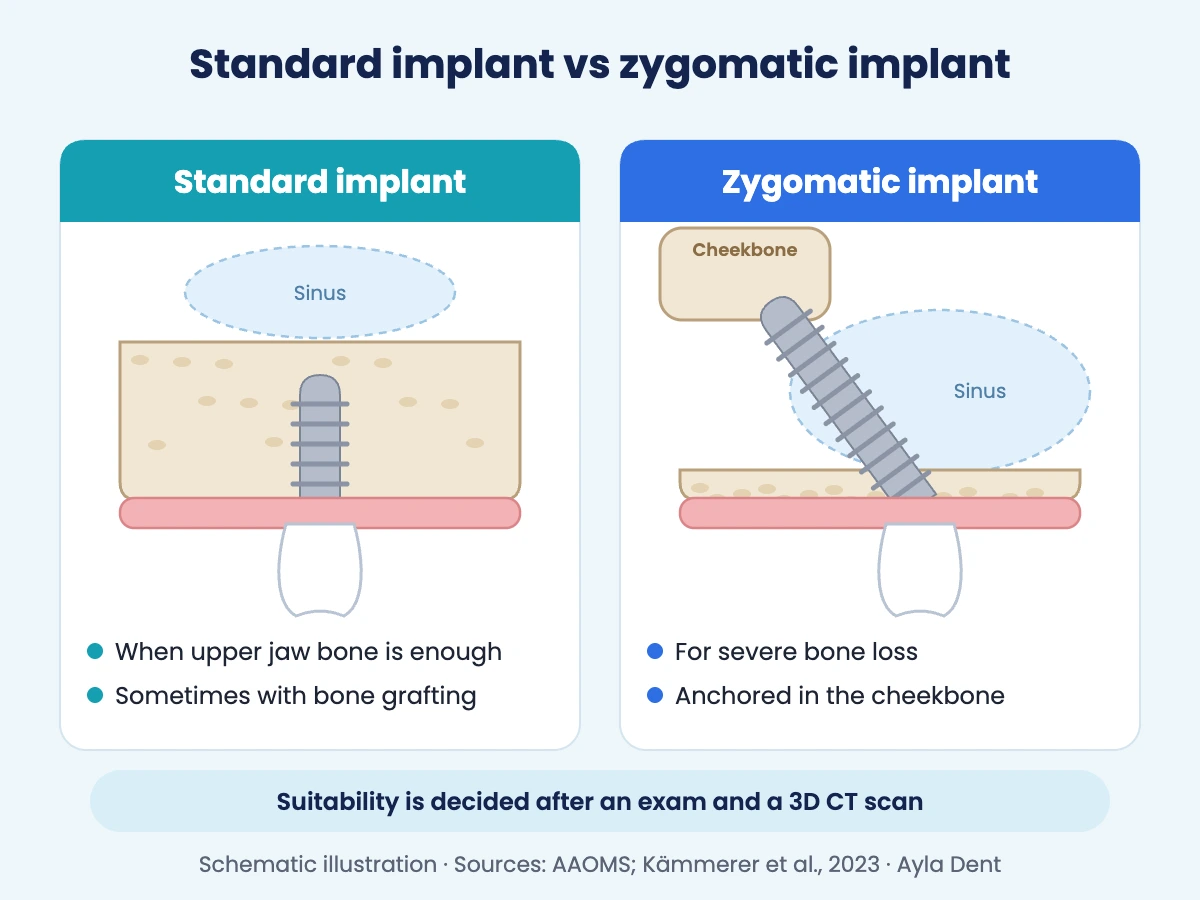
Zygomatic implants are an option for people with severe bone loss in the upper jaw. Instead of the jawbone, they anchor in the cheekbone. They can be an alternative to bone grafting, but they require advanced surgical experience and detailed planning.
What Are Zygomatic Implants?
Zygomatic implants are longer than standard implants and are anchored in the cheekbone (zygomatic bone).
Standard implants sit inside the jawbone. When there is not enough bone in the upper jaw, zygomatic implants use the cheekbone above it for support.
They are only used in the upper jaw.

Who Are Zygomatic Implants For?
Zygomatic implants may be considered if:
- There is severe bone loss in the upper jaw
- Bone grafting would be needed for standard implants but is not suitable
- Previous bone grafting did not give enough bone
- All upper teeth are missing and you want fixed teeth
General health, sinus health and any medicines you take are part of the assessment.
Bone Graft or Zygomatic Implants?
When the upper jaw lacks bone, there are two main routes. One is to build bone with grafting or a sinus lift so that standard implants can be placed. The other is to use zygomatic implants anchored in the cheekbone.
Grafting usually needs extra healing time. With zygomatic implants, that step can be skipped, which may shorten treatment.
The right route depends on the amount of bone, your anatomy and your general health. For grafting options, see: Dental Implant Without Enough Bone
How Are Zygomatic Implants Placed?
Planning
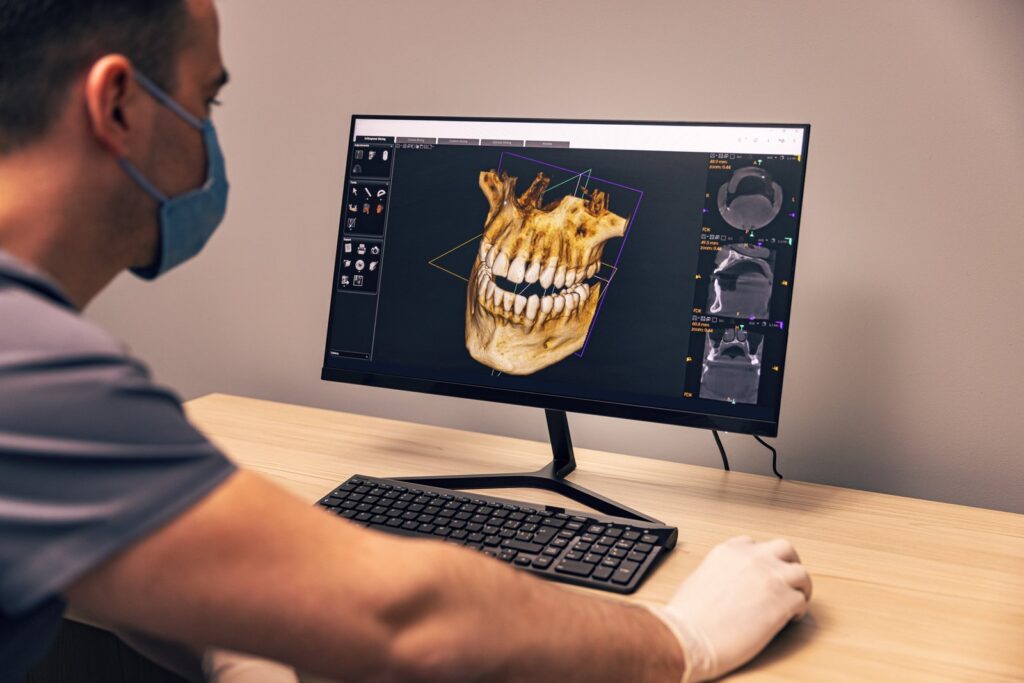
A 3D CT scan shows the cheekbone, sinuses and surrounding structures in detail. The direction and length of each implant are planned from these images.
Surgery
Zygomatic implants are placed by surgeons experienced in oral and maxillofacial surgery. Depending on the case, the procedure may be done under local anaesthetic, sedation or general anaesthetic.
They are often combined with standard implants in the front of the jaw. If the front also lacks bone, two zygomatic implants may be planned on each side.
Temporary and Final Teeth
In suitable patients, a temporary fixed bridge can be fitted shortly after surgery. The final bridge is made once healing is complete.
What Are the Risks?
Like any surgery, zygomatic implants carry risks. The main complications reported in studies are:
- Sinusitis
- Temporary numbness in the face (paraesthesia)
- Soft tissue infection
- An opening between the mouth and the sinus (oroantral fistula)
A 2023 systematic review found that complication rates varied considerably with the surgical technique used. This is why planning and surgical experience matter.
Swelling and bruising on the face are common in the first days. For general recovery advice, see: After a Dental Implant: Pain, Swelling and Diet
Zygomatic Implants vs All-on-4
With All-on-4, all implants go into the jawbone. This needs enough bone in the front of the jaw.
Zygomatic implants are considered when the upper jaw does not have enough bone even for that. Some plans combine both approaches.
Learn more: All-on-4 Dental Implants
Frequently Asked Questions
Can zygomatic implants be used in the lower jaw?
No. They anchor in the cheekbone, so they are only used in the upper jaw.
Does the procedure hurt?
It is done under anaesthetic. Pain, swelling and bruising are common afterwards and ease over time.
How long does treatment take?
In suitable patients, the implants and temporary fixed teeth can be completed within a short time. The final bridge follows healing.
Can anyone have zygomatic implants?
No. Sinus health, general health and anatomy must be assessed first.
How long do zygomatic implants last?
There is no single figure. Oral hygiene, regular check-ups and general health all affect long-term results.

Conclusion
For suitable patients with severe bone loss in the upper jaw, zygomatic implants can be an alternative to bone grafting. They need detailed planning and surgical experience.
This article is for general information only. Suitability for treatment is decided after an examination and the necessary imaging.
Sources
- Kämmerer P.W. et al. – Evaluation of surgical techniques in survival rate and complications of zygomatic implants for the rehabilitation of the atrophic edentulous maxilla: a systematic review. International Journal of Implant Dentistry, 2023: https://doaj.org/article/313df54dd0314739b912d325c1670582
- American Association of Oral and Maxillofacial Surgeons – Treatment option for patients with severe bone loss: https://myoms.org/what-we-do/dental-implant-surgery/treatment-option-for-patients-with-severe-bone-loss/