
You might notice your gums bleeding when you brush, floss or bite into something hard like an apple. Bleeding gums are common, but they are not something to ignore.
The most common cause is gum inflammation (gingivitis) caused by plaque along the gum line. Caught early, gingivitis can often be brought under control with good daily care and professional cleaning.
Why Do Gums Bleed?
Plaque and Gingivitis
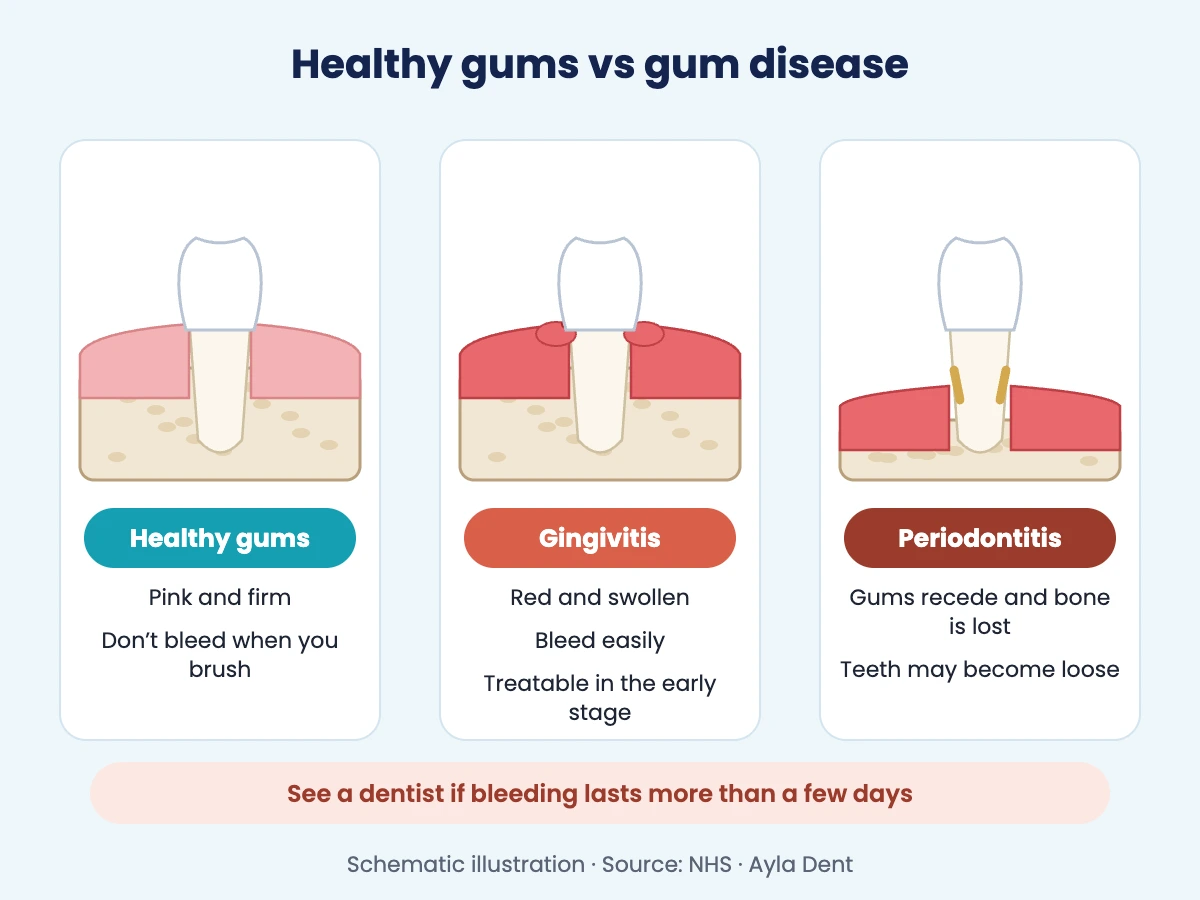
Plaque that is not removed by brushing and cleaning between the teeth irritates the gums. They become red, swollen and bleed easily. The NHS describes plaque as the main cause of gum disease.
Tartar
Plaque that stays on the teeth hardens into tartar. Tartar cannot be removed with a toothbrush and can keep the gums inflamed.
More on this: Professional Teeth Cleaning and Scaling
Brushing or Flossing Too Hard
A hard toothbrush, pressing too hard or snapping floss into the gums can cause bleeding.
Other Factors
- Smoking
- Hormonal changes in pregnancy
- Diabetes
- Some medicines, especially blood thinners
- Braces, bridges or rough filling edges
Why Do Gums Bleed When You Floss?
Slight bleeding is common in the first days of flossing. The cause is usually not the floss itself but inflammation that is already there.
Keep flossing gently and regularly rather than stopping. As the inflammation settles, bleeding usually does too.
If it continues, or you are unsure about your technique, ask your dentist.
Good technique: How to Floss Your Teeth
Are Bleeding Gums Serious?
Untreated gingivitis can progress to periodontitis, which affects the gums and the bone that supports the teeth. In advanced stages, teeth can become loose and may be lost.
So bleeding that keeps coming back should be checked, not left to settle on its own.
What to Do About Bleeding Gums
- Brush twice a day, gently, with a soft brush.
- Clean between your teeth daily with floss or interdental brushes.
- Consider stopping smoking.
- Keep up regular dental check-ups.
- Have tartar removed professionally: Scaling and Cleaning
Mouthwash can help, but it is not a solution on its own: Mouthwash: Should You Use It Every Day?

When to See a Dentist
See a dentist if:
- Bleeding lasts more than a few days
- Your gums are swollen, red or painful
- Bad breath does not go away
- Your teeth feel loose
- You notice your gums receding
Very painful, swollen gums, loose teeth, or a sore or lump in the mouth that does not heal need prompt attention.

Frequently Asked Questions
Will bleeding gums go away on their own?
Mild gingivitis can improve once plaque is cleaned away regularly. Tartar needs professional cleaning. Ongoing bleeding should be checked.
Is it normal for gums to bleed in pregnancy?
Hormonal changes can make gums more sensitive. A dental check-up during pregnancy is still important.
What helps bleeding gums?
Gentle, regular brushing, cleaning between the teeth and professional cleaning are the basics. Home remedies do not replace a dental check-up.
Can gums bleed around an implant?
Yes, the gums around implants can become inflamed too. Repeated bleeding around an implant should always be checked: Peri-Implantitis
Conclusion
Bleeding gums are usually a sign of plaque-related gum inflammation. Regular brushing, cleaning between the teeth and professional care can bring it under control. Bleeding that lasts or keeps coming back should be checked by a dentist.
This article is for general information only and does not replace personal diagnosis or treatment advice.
Sources
- NHS – Gum disease: Causes: https://www.nhs.uk/conditions/gum-disease/causes/
- NHS – How to keep your teeth clean: https://www.nhs.uk/live-well/healthy-teeth-and-gums/how-to-keep-your-teeth-clean/