
Dental implants and bridges are two of the main ways to replace a missing tooth. Both aim to restore chewing and appearance.
So, implant or bridge: which is better? There is no single answer that fits everyone.
The choice depends on how many teeth are missing, the condition of the neighbouring teeth, the jawbone, gum health and your general health.
What Is a Dental Implant?
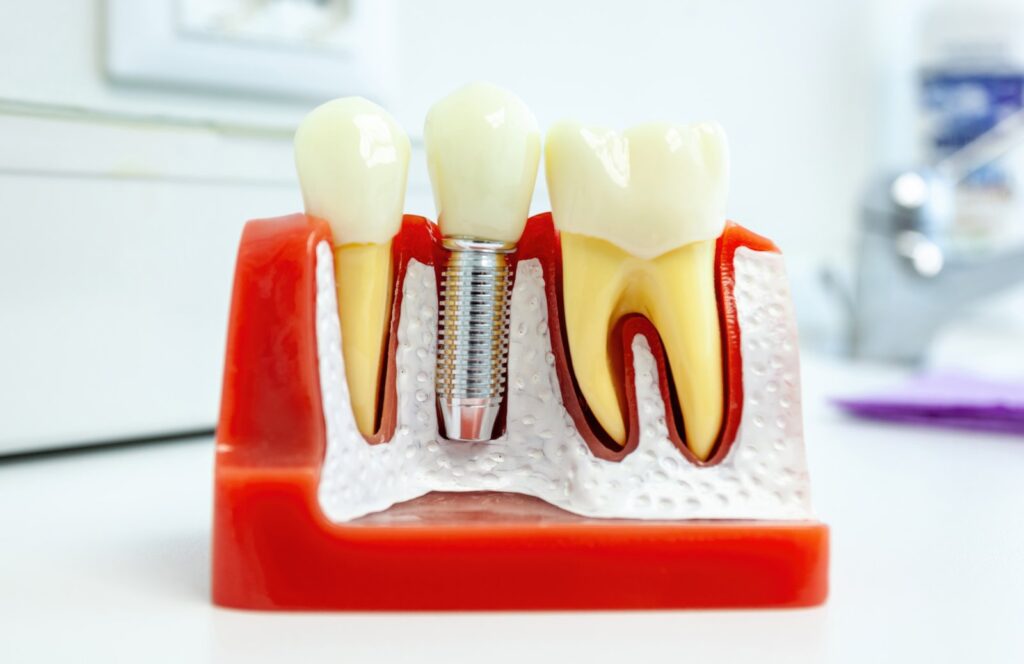
A dental implant is an artificial root placed in the jawbone to replace the root of a missing tooth.
A connector (abutment) and a crown or other restoration are then fitted on top.
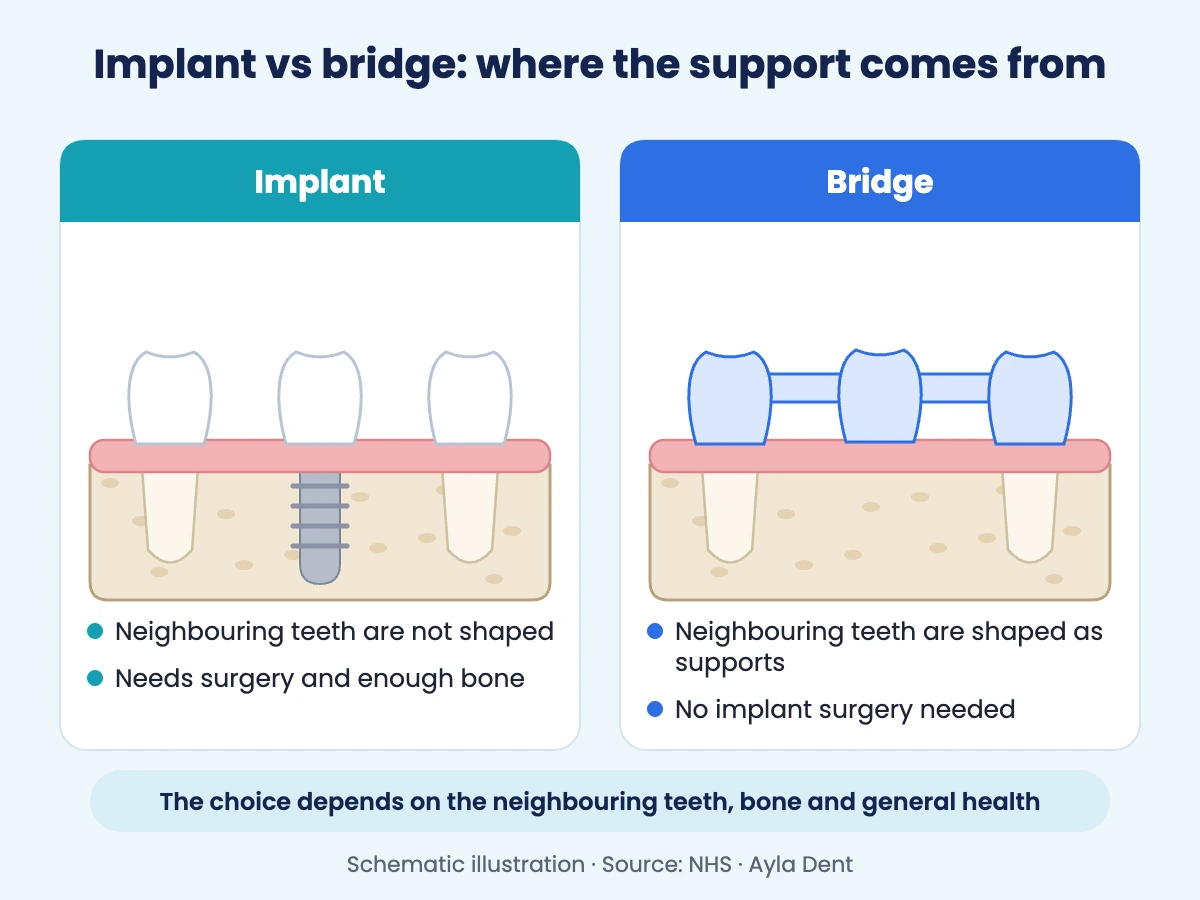
In most cases, an implant does not need the neighbouring teeth for support.
It does involve surgery and needs enough bone around it.
For an overview of implant treatment, see our dental implants page.
What Is a Dental Bridge?
A dental bridge is a fixed restoration that fills the gap left by one or more missing teeth.
A conventional bridge uses the teeth on either side of the gap as supports.
These supporting teeth usually need to be shaped (prepared) to hold the bridge.
In some cases, an adhesive (resin-bonded) bridge can be used, which needs less preparation of the supporting teeth.
Implant vs Bridge: Key Differences
| Feature | Implant | Bridge |
|---|---|---|
| Support | Implant placed in the jawbone | Usually the neighbouring teeth |
| Surgery | Required | Usually not needed for a tooth-supported bridge |
| Preparing neighbouring teeth | Usually not needed | Often needed for a conventional bridge |
| Bone needed | Enough bone is important | Does not need bone for an implant |
| Treatment time | Can be longer because of healing | Usually shorter |
| Care | Cleaning around the implant and check-ups | Cleaning under the bridge and around supporting teeth |
This table shows general differences. Different implant and bridge designs can vary.
Advantages and Limits of an Implant
A key advantage is that the neighbouring teeth usually do not need to be shaped to support the restoration.
In the right conditions, implants can also support fixed teeth for larger gaps.
On the other hand, implant treatment involves surgery. Bone volume, general health and healing can all affect whether it is suitable.
Like natural teeth, implants need daily care and regular professional check-ups.
Advantages and Limits of a Bridge
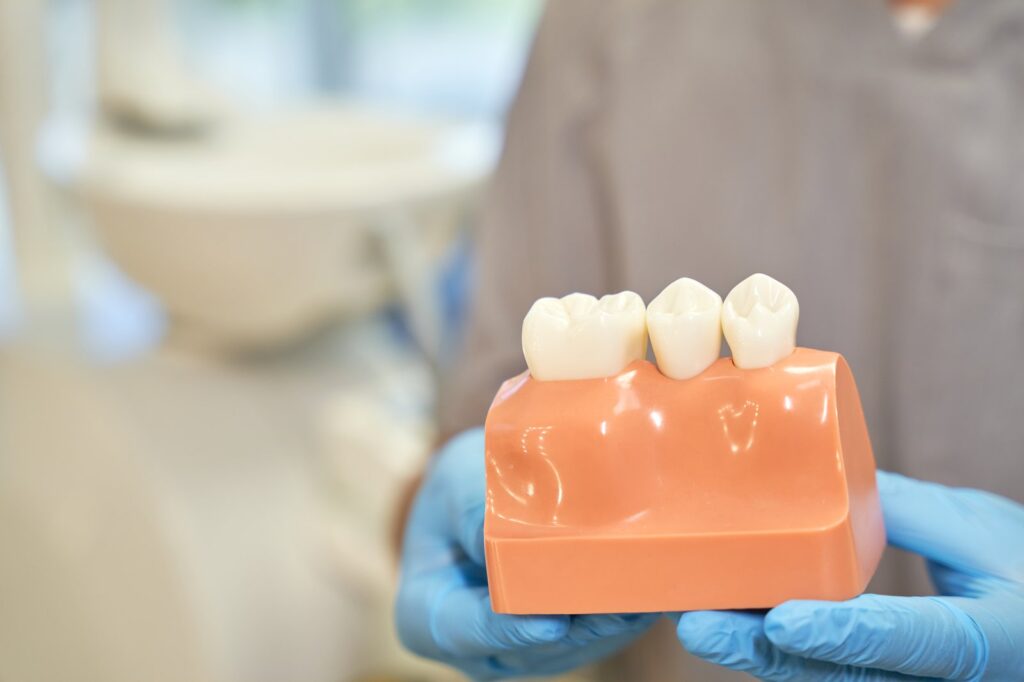
A conventional bridge is a fixed option that does not need implant surgery.
It can be a good choice when the neighbouring teeth already have large fillings or crowns.
However, healthy neighbouring teeth may need to be shaped. Cleaning around the bridge and the long-term health of the supporting teeth also matter.
Implant or Bridge When There Is Bone Loss?
If there is not enough jawbone for an implant, bone grafting may be considered.
Not everyone is suitable for these procedures.
For some patients, a bridge or another restorative option may be more appropriate.
Related reading: Dental Implant Without Enough Bone: Options
Which Lasts Longer, an Implant or a Bridge?
The lifespan of implants and bridges cannot be reduced to a single number.
Oral hygiene, gum health, teeth grinding, the materials used and regular check-ups all affect long-term results.
Both may need maintenance, repair or replacement over time. To keep the tissues around an implant healthy, see: Peri-Implantitis: Implant Infection Signs and Treatment
So expected lifespan alone should not decide the choice.
Which Costs Less, an Implant or a Bridge?
Costs depend on the scope of treatment.
For implants, the surgery, implant components, the crown and any bone grafting affect the cost.
For bridges, the condition of the supporting teeth, the materials and the size of the bridge matter.
Beyond the initial cost, consider maintenance and possible future replacement.

Frequently Asked Questions
Implant or bridge for a single missing tooth?
Both can be considered. The condition of the neighbouring teeth, the amount of bone and your general health are important.
Can I get an implant after having a bridge?
Sometimes, yes. The existing bridge and the conditions needed for an implant have to be assessed.
Does an implant feel like a natural tooth?
An implant-supported tooth can restore chewing function, but it is not biologically the same as a natural tooth.
How do you clean under a bridge?
Special interdental tools, such as floss threaders or small brushes, can be used under the bridge and around the supporting teeth. The method depends on the bridge design.
Conclusion
Implants and bridges are different ways to replace missing teeth, each with its own advantages, limits and care needs.
The right choice is made after your oral health has been assessed.
This article is for general health information only.
If a bridge is planned, zirconia vs porcelain crowns and zirconia crowns explain the material choices.
Sources
- NHS – Dental treatments: https://www.nhs.uk/live-well/healthy-teeth-and-gums/dental-treatments/
- Cambridge University Hospitals – Bone grafting for dental implants: https://www.cuh.nhs.uk/patient-information/bone-grafting-for-dental-implants/