
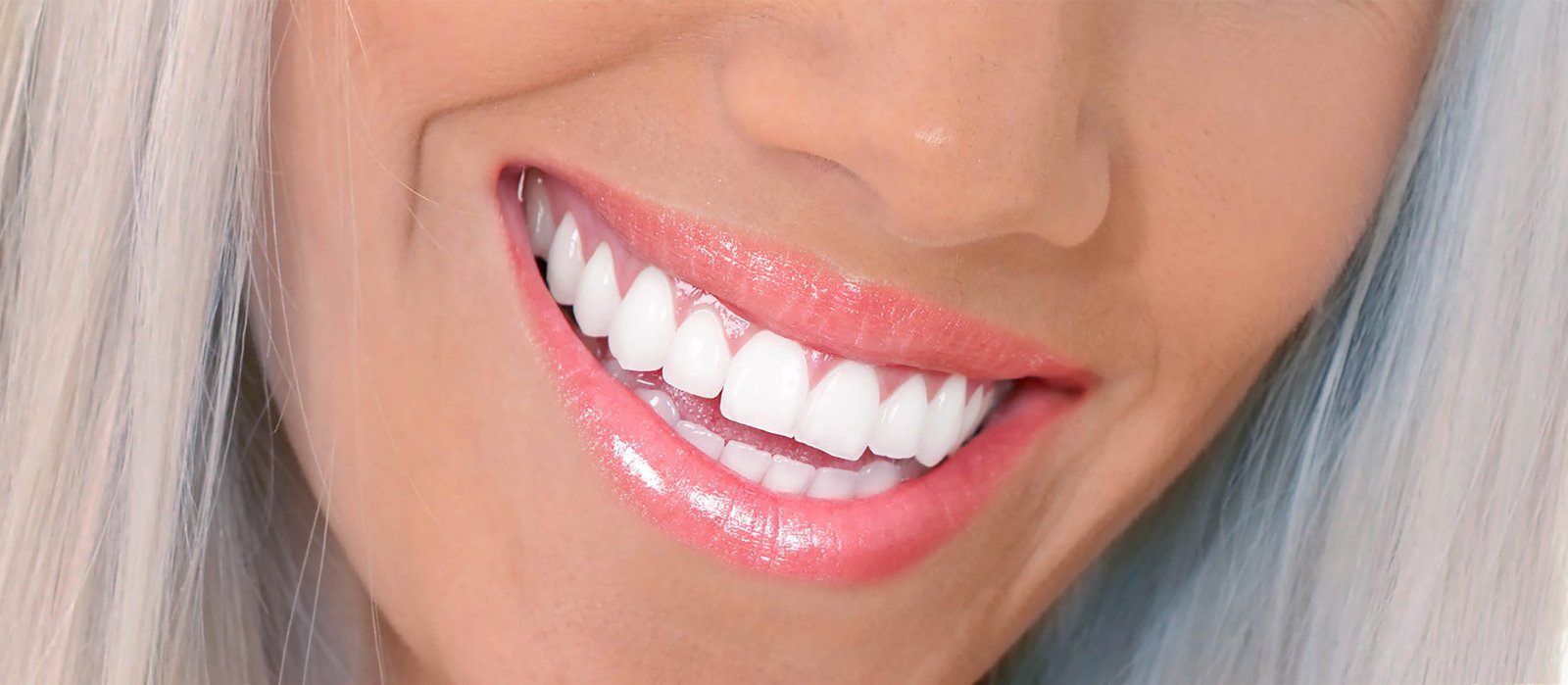
A Hollywood smile isn’t a medical treatment. It’s a popular name for a look: very white, straight, symmetrical teeth. Getting there usually involves veneers or crowns on several teeth at once.
A Hollywood smile is a goal, not a procedure. The real question is how you get there, and how much healthy tooth it costs. The same look can sometimes be reached with whitening and small touch-ups, sometimes with veneers, and sometimes with crowns. Those choices affect your teeth very differently.
This guide explains what a Hollywood smile involves, which treatments are used and what to know before you decide.
What Is a Hollywood Smile?
The term describes a smile where the front teeth look bright, straight, even in length and symmetrical. It usually covers the upper and lower teeth that show when you smile, and how many show varies from person to person.
Not every tooth needs the same treatment. One tooth may need a veneer, while another may only need whitening or a small composite touch-up.
Which Treatments Are Used?
A Hollywood smile isn’t a single procedure. It can combine one or more of these:
- Whitening: lightens your natural teeth with no tooth removal.
- Orthodontics: straightens crowded or gappy teeth. Sometimes it’s enough on its own; sometimes it sets up later cosmetic work.
- Composite bonding: fixes small chips, gaps and shape issues with little or no tooth removal.
- Veneers: cover only the front of the tooth.
- Crowns: cover the whole tooth. They may be needed for teeth with large fillings, fractures or root canal treatment.
- Gum contouring: evens out the gumline or reduces gum display to improve tooth proportions.
See Veneers, Zirconia Crowns and Composite Bonding for more.
Why Veneers vs Crowns Matters
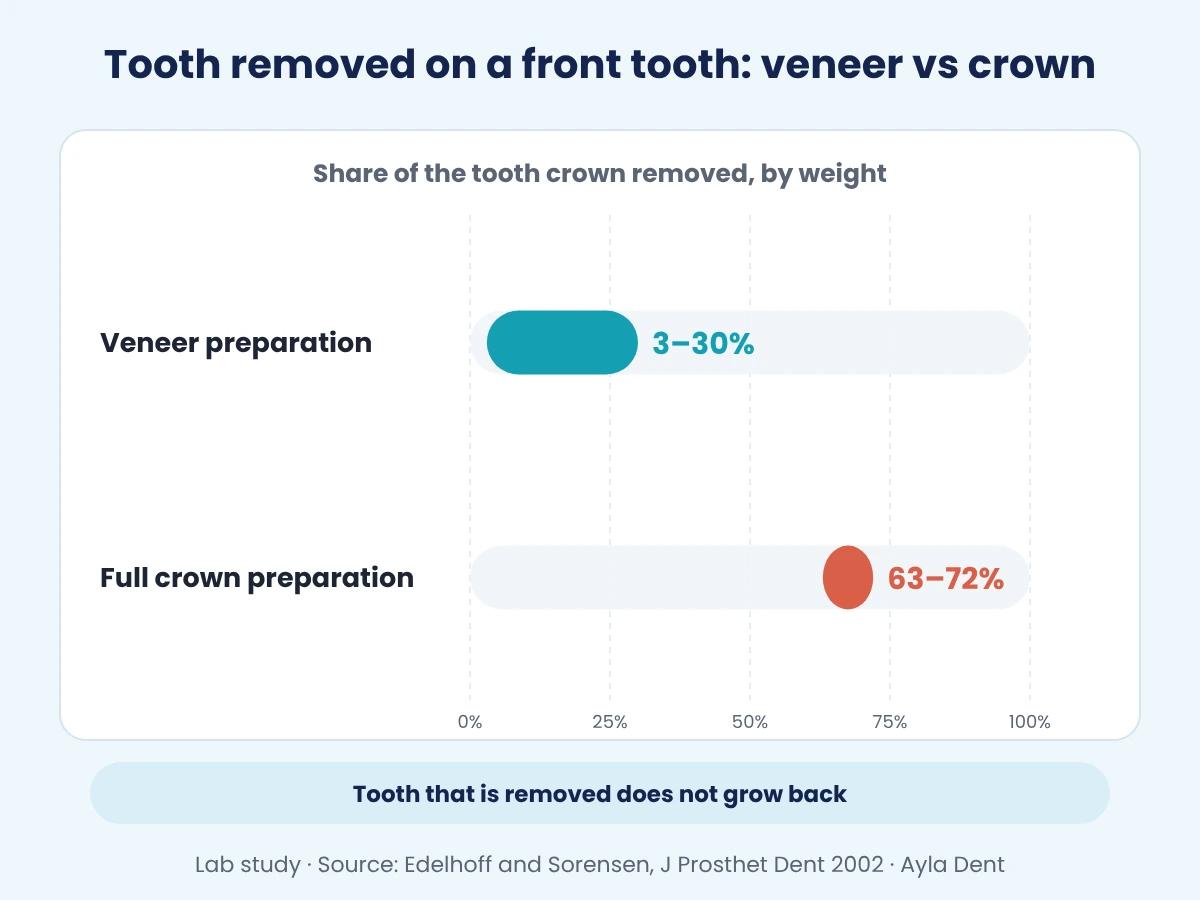
The most important question in any smile makeover is how much tooth will be removed.
A lab study on front teeth found that veneer preparations removed roughly 3% to 30% of the crown of the tooth by weight. Full crown preparations removed roughly 63% to 72% (Edelhoff and Sorensen, 2002).
So preparing a healthy front tooth for a crown means far more tooth loss than preparing it for a veneer. And removed tooth doesn’t grow back.
The Problem With Over-Preparing Healthy Teeth
The most common criticism of Hollywood smile treatment is cutting down healthy teeth for crowns purely for looks.
That carries risks:
- Nerve (pulp) damage: removing a lot of tooth can affect the nerve inside, sometimes leading to root canal treatment later. A meta-analysis of living teeth used to support crowns or bridges found no nerve or root-tip problems in 92–98% of teeth over 5 to 20 years (Kohli et al., 2022). That also means a smaller share did develop problems.
- Sensitivity: removing enamel exposes the dentine beneath, which can make teeth sensitive to hot and cold.
- Weaker veneer bonding: veneers last longer when bonded to enamel. As more dentine is exposed, success rates fall (Alqutaibi et al., 2024).
- Gum problems: poorly fitting edges close to or below the gumline are harder to clean and can lead to gum inflammation.
- No way back: a crowned tooth needs a restoration for life. Crowns may need replacing over time, and each replacement can cost a little more tooth.
That’s why a good smile plan starts by asking: what’s the least invasive way to get the result?
Natural vs “Too White”
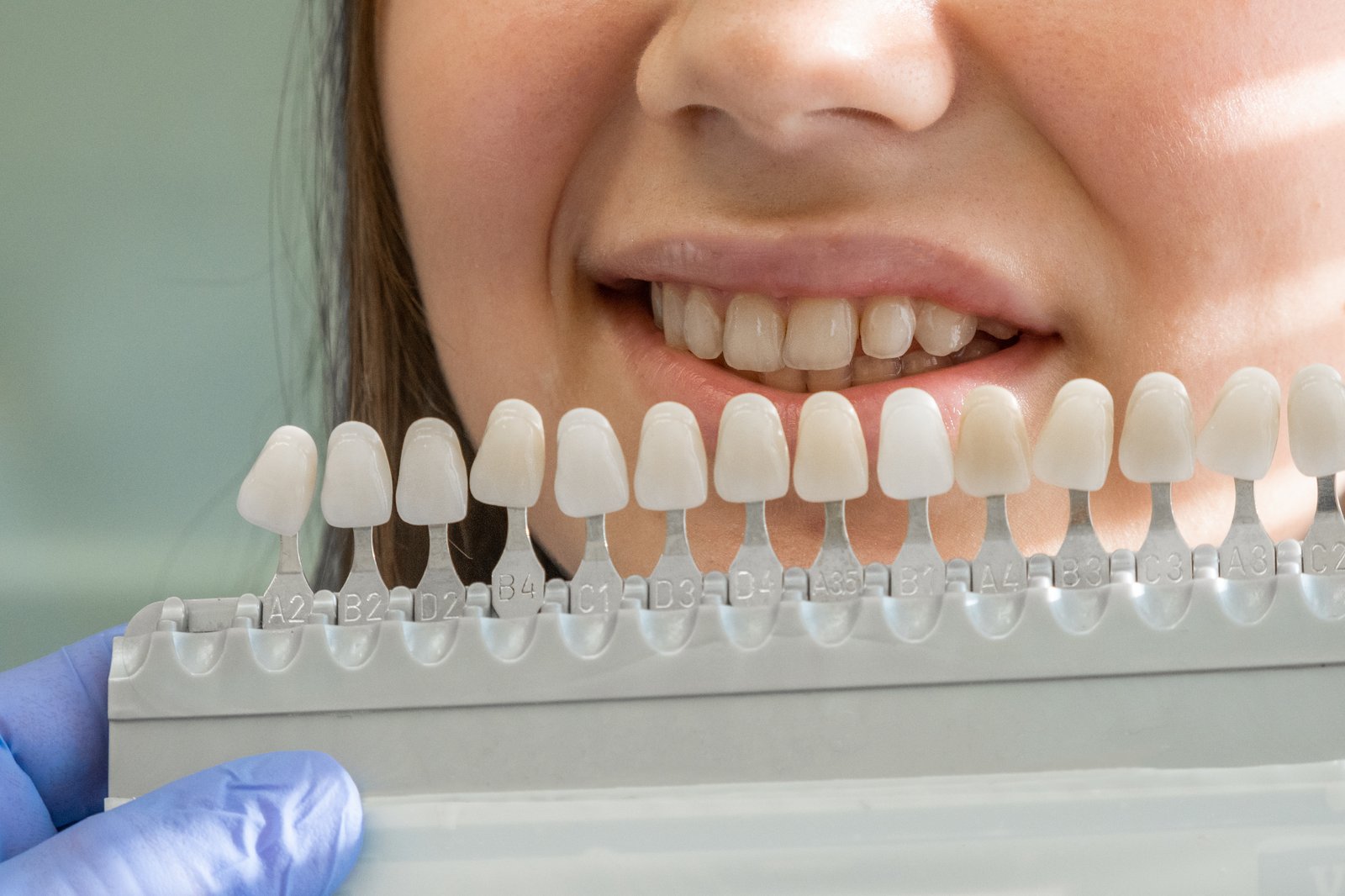
Many people picture very white, opaque, identical teeth. But natural teeth aren’t pure white. They have slight translucency at the edges, small differences between teeth, and proportions that suit the face.
When choosing a shade, it helps to consider:
- The whites of your eyes and your skin tone
- Your age
- The colour of your lower teeth, if they won’t be treated
- Whether you want a natural look or a clearly bright one
A very light shade can look striking in photos but artificial in everyday life. You can see this before treatment with a preview.
Previewing the Result
You can see your likely result before any tooth is touched:
- Digital smile design plans the result from photos and scans.
- A mock-up places the planned teeth over your own in a temporary material, so you can see them in the mirror and while talking.
A preview clarifies what you expect and helps plan how much tooth, if any, needs to be removed.
Questions to Ask Before You Decide
- Which teeth will be treated, with what, and why?
- Are veneers or crowns planned? Why?
- How much tooth will be removed?
- Is there a less invasive option, such as whitening, orthodontics or bonding?
- Can I see a preview first?
- If I grind my teeth, how does that change the plan?
- What check-ups and maintenance will I need afterwards?
When It May Not Be Suitable
- Untreated decay or gum disease
- Uncontrolled clenching or grinding
- Irregular oral hygiene
- Expectations that can’t realistically be met
Learn about grinding in What Is Bruxism?
Aftercare
- Brush twice a day and clean between teeth with floss or an interdental brush
- Don’t bite hard objects with your front teeth
- Wear a night guard if you grind
- Keep up regular check-ups
Frequently Asked Questions
How many teeth are involved?
There’s no fixed number. Planning usually covers the teeth that show when you smile, and that number varies. Not every tooth needs the same treatment.
Are teeth filed down for a Hollywood smile?
It depends on the method. Whitening and bonding remove little or no tooth. Veneers usually remove a thin layer, while crowns remove much more.
Is a Hollywood smile permanent?
Veneers and crowns are permanent in that any tooth removed can’t be replaced. The restorations themselves may need maintenance, repair or replacement over time.
Will it look natural?
It can, if colour, shape and length are planned to suit your face. Very light shades and identical teeth tend to look artificial.
Summary
A Hollywood smile is an aesthetic goal. The route there can involve whitening, orthodontics, bonding, veneers and crowns, and these affect your teeth very differently. Over-preparing healthy teeth can have lasting consequences.
A good plan aims for the result you want with the least intervention your teeth need.
This article is for general information. It does not replace an examination.
Sources
- Edelhoff D, Sorensen JA. Tooth structure removal associated with various preparation designs for anterior teeth. J Prosthet Dent. 2002;87(5):503–509. https://pubmed.ncbi.nlm.nih.gov/12070513/
- Kohli S, Bhatia S, Al-Haddad A, Pulikkotil SJ, Jamayet NB. Pulpal and Periapical Status of the Vital Teeth Used as Abutment for Fixed Prosthesis: A Systematic Review and Meta-Analysis. J Prosthodont. 2022;31(2):102–114. https://pubmed.ncbi.nlm.nih.gov/34516686/
- Alqutaibi AY, Saker S, Alghauli MA, Algabri RS, AbdElaziz MH. Clinical survival and complication rate of ceramic veneers bonded to different substrates: A systematic review and meta-analysis. J Prosthet Dent. 2024. https://doi.org/10.1016/j.prosdent.2024.03.019